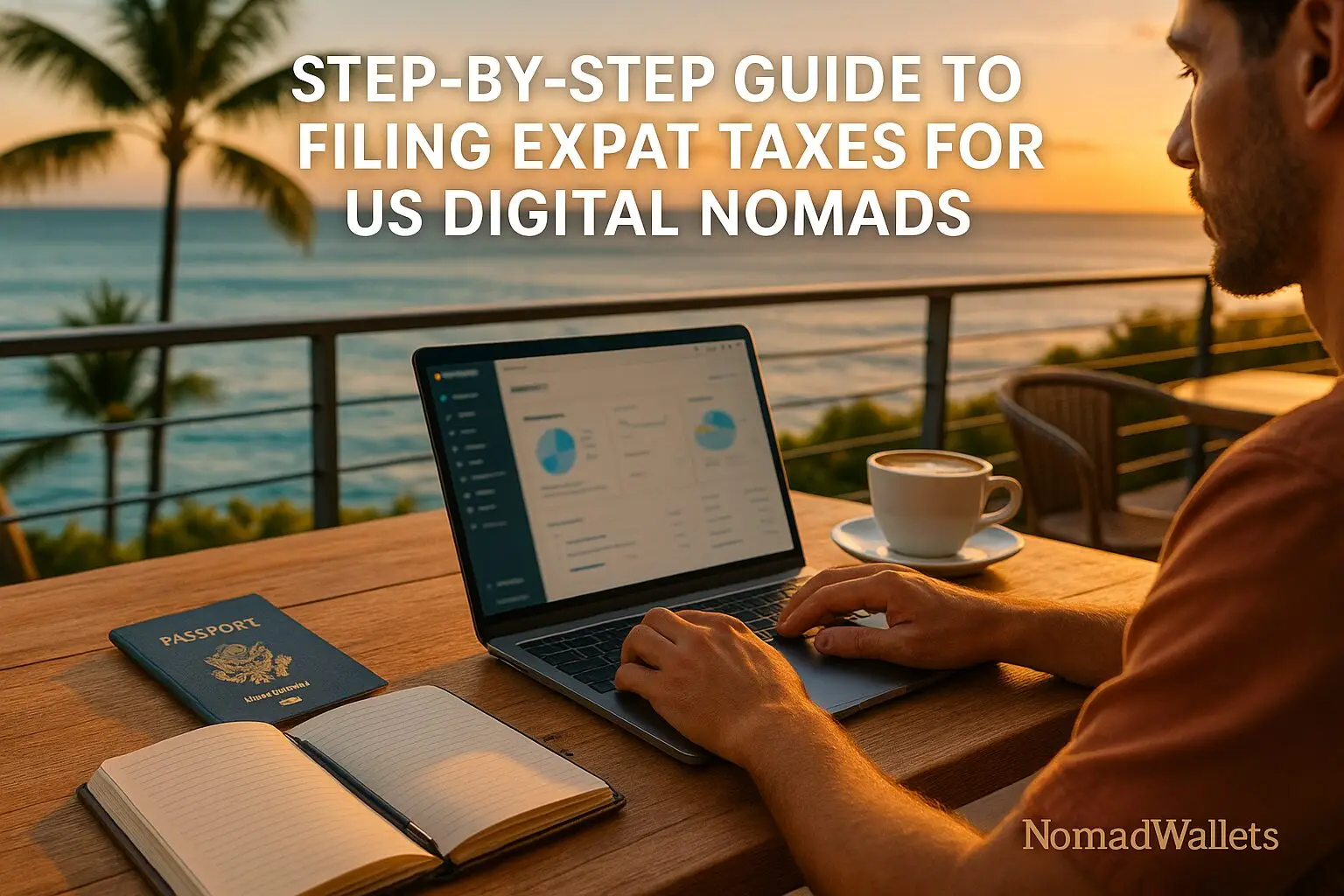
I remember my first real expat tax filing US like it was yesterday. I was holed up in a tiny apartment in Lisbon, the kind with tiles that echo every keystroke, and a view of the Tagus River that was supposed to inspire me. Instead, I was sweating over a stack of crumpled receipts and a laptop screen full of IRS jargon.
I’d been freelancing for six months—jumping between Portugal and Spain, picking up graphic design gigs—and suddenly April rolled around like a bad joke. “Do I even have to file if I’m not in the States?” I thought. Spoiler: yes. And the mistakes I made that year cost me a chunk of change in penalties and a lot of sleep.
But here’s the thing: expat tax filing US doesn’t have to be a horror story. It’s a skill, like packing a carry-on or finding reliable Wi-Fi in a new city. This guide is what I wish I’d had back then—a straightforward, no-BS walkthrough to get you through it with your sanity intact.
I’m writing this as someone who’s been through the wringer: the all-nighters reconciling currencies, the panic over a missed FBAR deadline, and the relief of finally getting it right. We’ll break expat tax filing US into eight actionable steps, explain the key forms in plain English (looking at you, Form 2555 and Schedule C), flag the pitfalls that lead to audits, and touch on those sneaky state tax nuances.
By the end, you’ll have the tools to file confidently—and maybe even feel a little empowered. Let’s dive in.
Before You Dive In: The Basics Every Nomad Needs to Know
First off, if you’re a U.S. citizen or Green Card holder living abroad, expat tax filing US is non-negotiable. The IRS doesn’t care if you’re sipping coffee in Bali or hiking in Patagonia—you report your worldwide income every year. The silver lining? Expats get an automatic extension to June 15 for filing (though any taxes owed are still due by April 15). Miss that, and penalties start stacking up.
Key terms we’ll unpack:
- FEIE (Foreign Earned Income Exclusion): Lets you exclude a big slice of your foreign-earned income from U.S. taxes—up to about $120,000 for 2025, adjusted for inflation.
- FTC (Foreign Tax Credit): Credits you for taxes paid to another country, dollar for dollar.
- Schedule C: Your freelance income/expense report.
- FBAR: A separate report for foreign bank accounts if they hit $10,000 total at any point.
- FATCA (Form 8938): Similar to FBAR but for higher-value foreign assets.
Think of expat tax filing US as building a story: who you are, where you’ve been, what you’ve earned, and why you’re claiming what. Get that right, and audits become less scary.
Important Filing Deadlines and Extensions
| Filing Type | Standard Deadline | Expat Automatic Extension | Final Extension (Request) |
| Federal Tax Return | April 15 | June 15 | October 15 |
| FBAR (FinCEN 114) | April 15 | October 15 | N/A |
| Quarterly Estimated Tax Payments | April 15, June 15, Sept 15, Jan 15 | N/A | N/A |
Step 1: Gather Your Proof Like It’s Your Lifeline
Start here, always. My first year, I thought “I’ll just remember” the trips and transfers. Big mistake—when the IRS asks for proof, “trust me” doesn’t cut it. Create a dedicated folder (digital or physical) with these essentials:
- Income docs: 1099s from U.S. clients, invoices from foreign gigs, bank statements showing deposits. If you’re self-employed, tally everything in a spreadsheet.
- Expense records: Receipts for business stuff like laptop repairs, co-working passes, software subs, and travel tied to work. I once deducted a flight to a client meeting in Berlin—had the email chain to prove it.
- Foreign account summaries: Statements from every non-U.S. bank, PayPal, Wise, or crypto wallet. This is FBAR fuel.
- Travel log: A simple calendar or app noting every day abroad. Apps like TripIt or a Google Sheet work wonders.
- Any foreign tax docs: If you paid taxes locally, grab those statements for FTC claims.
Pro tip: Make this a monthly ritual. At the end of each month, snap photos of receipts and jot notes on trips. It turns expat tax filing US from chaos to checklist, and if an audit hits (they’re rare but real), you’re ready.
A friend in Mexico City skipped this step once. He got audited over a “suspicious” expense deduction for a co-working space. Without receipts, he paid extra penalties. Lesson: Document like your freedom depends on it—because in a way, it does.
Step 2: Nail Your Filing Status and Residency Basics
This is straightforward but sets the tone. Are you single, married filing jointly, head of household? Pick what fits your life now—it affects deductions and brackets, same as stateside.
Next, define your “tax home.” For expat tax filing US, it’s where your main economic activity happens—not necessarily where you sleep most nights. If you’re a digital marketer bouncing between Thailand and Vietnam but earning from global clients, your tax home is abroad as long as you meet the tests (more on that soon).
Pro tip: If married to a non-U.S. citizen, consider “married filing separately” to avoid pulling their income into the mix. It’s a common move in expat tax filing US circles.

Step 3: Tackle Schedule C for Self-Employment Income
Ah, Schedule C—the freelancer’s best friend and occasional nemesis. If you’re self-employed (most nomads are), this is where you report business income and expenses to find your net profit.
- List gross income: All payments, converted to USD (use IRS average rates or daily if precise).
- Subtract expenses: Legit ones like domain renewals, marketing tools, business meals (50% deductible), and home office if you have a dedicated spot. For nomads, “home office” can be tricky—calculate based on square footage used exclusively for work.
- Net profit = taxable income, which flows to Form 1040.
In my early days, I over-deducted “travel” thinking every flight qualified. Nope—only if it’s primarily business. Now, I tie each expense to a client or project in notes.
Pro tip: Use categories like “Tech/Software” or “Professional Development” to keep it organized. This not only simplifies expat tax filing US but makes audits less painful if they come knocking. greenbacktaxservices
Step 4: Handle Self-Employment Tax on Schedule SE
If Schedule C shows $400+ net profit, welcome to self-employment tax—15.3% for Social Security and Medicare. It’s calculated on Schedule SE and added to your total tax bill.
Anecdote: I once underestimated this in a high-earning year abroad and got hit with underpayment penalties. Now, I set aside 20-25% of each invoice for taxes. It’s a game-changer for peace of mind in expat tax filing US.
Pro tip: Pay quarterly estimates (due April 15, June 15, September 15, January 15) to avoid penalties. Use IRS Form 1040-ES to calculate.
Step 5: Pick Your Tax Break—FEIE (Form 2555) or FTC (Form 1116)
This is the heart of expat tax filing US savings. Choose wisely based on your year.
- FEIE via Form 2555: Exclude earned income up to the limit if you pass the tests. Physical Presence (330 days abroad in 12 months) is nomad-friendly; Bona Fide Residence requires deeper roots. Fill in your qualifying days, income, and housing costs (for extra exclusion).
A buddy in Bali qualified for FEIE but didn’t track days precisely. Audit came, and he lost the exclusion for partial months. Now he uses a app to log every border crossing.
- FTC via Form 1116: Credit foreign taxes paid. Great if you’re in a high-tax spot like Germany.
Pro tip: Run both scenarios. If foreign taxes are low, FEIE wins; if high, FTC often does. Document your choice—it’s EEAT gold for expat tax filing US. taxesforexpats
FEIE vs FTC Comparison
| Feature | FEIE (Form 2555) | FTC (Form 1116) |
| Qualifying Test | Physical Presence or Bona Fide Residence | No specific presence test |
| Income Exclusion | Up to ~$120,000 foreign-earned income | No exclusion, but credits foreign taxes paid |
| Best For | Low or no foreign income tax jurisdictions | High foreign tax jurisdictions |
| Impact on Other Deductions | May reduce some credits/deductions | Often allows full deduction of foreign tax paid |
| Form Required | Form 2555 | Form 1116 |
| Typical Nomad Use Case | Nomads in low-tax countries (e.g., UAE) | Nomads in high-tax countries (e.g., Germany) |
Step 6: Don’t Forget FBAR and FATCA
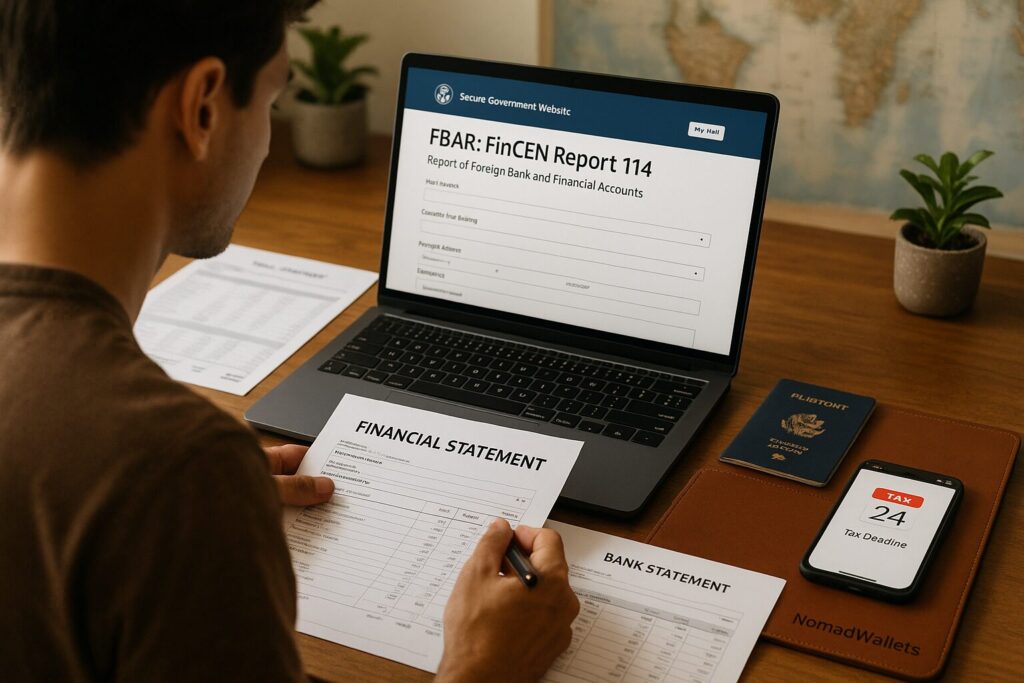
FBAR (FinCEN 114): File if foreign accounts topped $10,000 anytime. Deadline: April 15 (auto-extended to October 15). Penalties are steep—up to $10,000 for non-willful misses. myexpattaxes
FATCA (Form 8938): For assets over $200,000 (single filer abroad). Attach to your return.
Pro tip: List accounts early; use the FinCEN site for FBAR. This is non-tax but crucial in expat tax filing US.
Step 7: Navigate State Tax Nuances
States like California or New York don’t let go easily. If you have ties (license, voting, property), you might owe. Sever them: get a new domicile in a no-tax state like Texas, update everything.
Pro tip: Keep a “domicile break” file with proof. It’s the unsung hero of expat tax filing US.
State Tax Filing Triggers (Examples of Aggressive States)
| State | Domicile Factors | Filing Required if Domiciled? |
| California | Driver’s license, property, voter registration | Yes |
| New York | Residency over 183 days, ties to NY | Yes |
| Virginia | Voter registration, home ownership | Yes |
| Texas | No state income tax | No |
| Florida | No state income tax | No |
Step 8: Review, Submit, and Plan Ahead
You’ve made it this far—now it’s time to wrap things up with confidence. Take a final, careful look at your entire return: Does it tell a clear, consistent story of your year abroad? Double-check for any mismatches in income figures, expense deductions, travel days for FEIE, or foreign account details for FBAR.
Make sure all forms (like Schedule C and Form 2555) are attached and calculations add up. Once you’re satisfied, e-file using expat-friendly software to streamline the submission and get confirmation quickly.
Looking ahead, set up simple reminders in your calendar for quarterly estimated tax payments (due April 15, June 15, September 15, and January 15) and monthly check-ins to track income, expenses, and travel. This proactive habit turns expat tax filing US into a smooth routine rather than a yearly scramble—trust me, it saved my sanity after a few chaotic seasons.
Resources and Next Steps:
For software that handles the complexities of expat tax filing US, check out user-friendly options like MyExpatTaxes. If your situation feels overwhelming (think multiple countries or business income), consider consulting pros at services like Greenback—they specialize in nomad-friendly advice. Start exploring these today to make your next filing even easier, and remember: staying organized year-round is your best defense against surprises.
Take Control of Your Expat Taxes Today
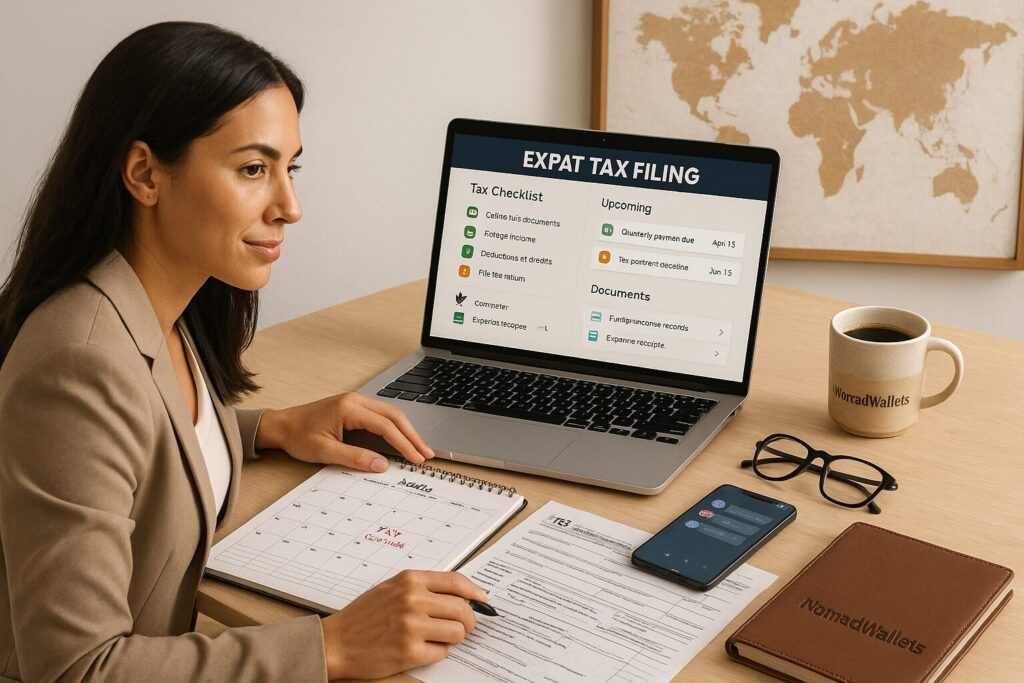
Don’t let tax season sneak up on you. Start organizing your documents, tracking your income and expenses, and familiarizing yourself with key forms like Form 2555 and Schedule C. Staying proactive now will save you time and stress when tax deadlines arrive.
If you want extra peace of mind, consider using reputable expat tax software or consulting with a specialist who understands the complexities of expat tax filing US. Choosing the Best Digital Nomad Tax Software in 2025 isn’t just about convenience—it’s about ensuring accuracy, maximizing deductions, and reducing the chances of costly mistakes. The right tools and expert support can make all the difference.
Get prepared. File confidently. Protect your hard-earned freedom.
Frequently Asked Questions About Expat Tax Filing US
Q1. Do all U.S. citizens living abroad need to file U.S. taxes?
Yes. Regardless of where you live, if you’re a U.S. citizen or Green Card holder, you must file a federal income tax return if your income exceeds IRS thresholds for your filing status.
Q2. What is the Foreign Earned Income Exclusion (FEIE)?
FEIE allows qualifying expats to exclude up to approximately $120,000 of foreign-earned income from U.S. taxation. To qualify, you must meet either the Physical Presence Test (330 full days abroad) or the Bona Fide Residence Test.
Q3. What is the FBAR and do I have to file it?
FBAR (FinCEN Form 114) must be filed if your aggregate foreign financial accounts exceeded $10,000 at any time during the year. It’s filed separately from your tax return, with an automatic extension until October 15.
Q4. Can I use the Foreign Tax Credit instead of FEIE?
Yes. The Foreign Tax Credit (Form 1116) lets you credit foreign income taxes paid against U.S. taxes owed. It’s often a better option when you pay high local taxes. Many expats run both scenarios to decide which saves more.
Q5. What about state income tax filing?
Your U.S. state of domicile may still require you to file state taxes if you retain ties such as a driver’s license, voter registration, or property ownership. States like California and New York are particularly strict.
Q6. What are the tax filing deadlines for U.S. expats?
Federal tax returns are due April 15, but expats get an automatic two-month extension to June 15. Additional extensions can be requested up to October 15, or December 15 in special cases. FBAR deadlines are April 15 with automatic extension to October 15.
Q7. What if I’m self-employed while abroad?
You must file Schedule C with your Form 1040 reporting all freelance or business income and expenses. If your net earnings exceed $400, self-employment tax on Schedule SE applies.
Q8. Can I file my expat taxes myself, or should I hire a professional?
Simple expat tax filing can be managed with dedicated software, especially for those filing FEIE and Schedule C. However, complex situations involving multiple countries, treaties, or investments benefit from a qualified expat CPA.

Tushar Sharma is the founder and editor of NomadWallets, where he writes about international banking, travel cards, cross-border payments, taxes, and financial tools for digital nomads and globally mobile professionals. He created NomadWallets to make global money decisions simpler through practical, research-backed guides built from official sources and real-world financial data.