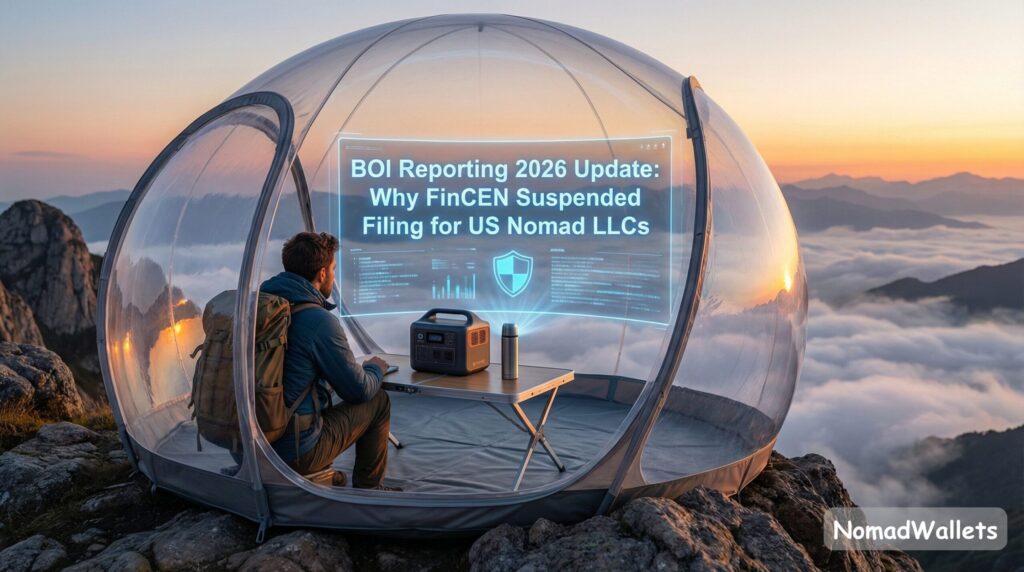
Editor’s Note: This article has been fully updated in January 2026 to reflect the March 2025 Interim Final Rule. FinCEN finalized this rule on March 25, 2025, and published it in the Federal Register on March 26, 2025. This guide reflects the enforcement posture in effect as of January 2026.
If you are a digital nomad, an online entrepreneur, or a small business owner in the United States, you have likely spent the last two years living in fear of three letters: BOI.
The BOI Reporting 2026 landscape was supposed to be a minefield. We were told that every LLC, every C-Corp, and every mom and pop shop would have to send the federal government a dossier of personal information or face financial ruin. We were warned about the $591 per day civil penalties. We were warned about the two year prison sentences. We were told that privacy for small business owners was effectively dead.
But then, the regulatory landscape shifted.
In a significant move that responded to intense legal pressures and industry pushback, the Financial Crimes Enforcement Network (FinCEN) issued an Interim Final Rule in March 2025 that fundamentally altered compliance requirements for millions of business owners.
The headline? Domestic U.S. formed entities are currently not subject to BOI filing requirements due to a FinCEN enforcement suspension implemented via the March 2025 Interim Final Rule.
However, before you pop the champagne and close this tab, you need to be careful. This is not a permanent Congressional repeal it is a regulatory suspension. While the federal requirement is currently paused for domestic entities, specific Foreign entities and State-level Transparency Acts still pose compliance risks.
In this comprehensive 3,000 word guide, we will break down exactly what the Interim Rule says, why your filing obligation is likely suspended, and how to navigate the evolving world of state vs federal transparency laws.
The “Panic” Era vs. The 2026 Reality
To understand where we are with BOI Reporting 2026, we have to look at the context. The Corporate Transparency Act (CTA) was enacted by Congress with the stated goal of combatting money laundering, terrorism financing, and other illicit activities. The idea was simple: shell companies are used by bad actors to hide money. Therefore, the government wanted a central database of who really owns every company in America.

The Original Threat (2024-2025)
Under the original rollout, BOI Reporting 2026 was going to be a massive burden for the digital nomad community. For a digital nomad traveling through Bali, Lisbon, or Medellin, this created massive anxiety:
- Broad Scope: If you filed a document with a Secretary of State (like a Wyoming LLC), you were a “Reporting Company.” It didn’t matter if you were a freelancer making $10k or a startup making $10M.
- Invasive Data: You had to provide your full legal name, date of birth, home address, and a photo ID (passport or driver’s license) to FinCEN.
- Continuous Updates: If you moved addresses (a common occurrence for nomads), you had 30 days to update the federal government.
- Draconian Penalties: Willful failure to report carried severe civil penalties ($591/day) and potential criminal liability.
For a digital nomad traveling through Bali, Lisbon, or Medellin, this created massive anxiety. How do you update your “current residential address” when you are staying in an Airbnb for three weeks? What if you miss a deadline because you were on a detox retreat? The anxiety around BOI Reporting 2026 was palpable.
The March 2025 Turning Point
Legal challenges began almost immediately. The most famous case, National Small Business United (NSBU) v. Yellen, exposed constitutional vulnerabilities in the CTA’s broad application. The plaintiffs argued that Congress exceeded its powers under the Commerce Clause by regulating entities that simply formed a company, without proving they were engaged in interstate commerce.
While the court’s initial ruling was limited to the plaintiffs, it triggered a broader policy re-evaluation at the Treasury Department. Facing mounting legal uncertainty and enforcement risk, FinCEN acted.
FinCEN finalized the Interim Final Rule on March 25, 2025, and published it in the Federal Register on March 26, 2025.
This rule did not “repeal” the CTA, but it significantly narrowed the scope of enforcement. FinCEN effectively admitted that enforcing the requirement on 32 million small domestic businesses was untenable under the current legal climate. As a result, the primary focus of BOI Reporting 2026 has shifted away from domestic small businesses and toward foreign entities operating in the U.S.
“FinCEN has made clear that enforcement priorities have shifted toward foreign entities and high-risk structures.”
– Treasury Department commentary, March 2025
The Timeline of BOI Regulatory Changes
| Date | Event | Impact on Nomads |
| Jan 1, 2024 | CTA Goes Live | Panic. 32 Million businesses faced filing requirements. |
| Mar 1, 2024 | NSBU v. Yellen Ruling | Federal Court ruled CTA unconstitutional regarding specific plaintiffs. |
| Mar 25, 2025 | Rule Finalized | Treasury finalizes decision to suspend domestic enforcement. |
| Mar 26, 2025 | Publication Date | MAJOR PIVOT. Interim Final Rule published in Federal Register. |
| Jan 1, 2026 | NY Transparency Act | New York’s state-level disclosure law becomes effective. |
The “Domestic Suspension”: Why Your US LLC is Likely Safe
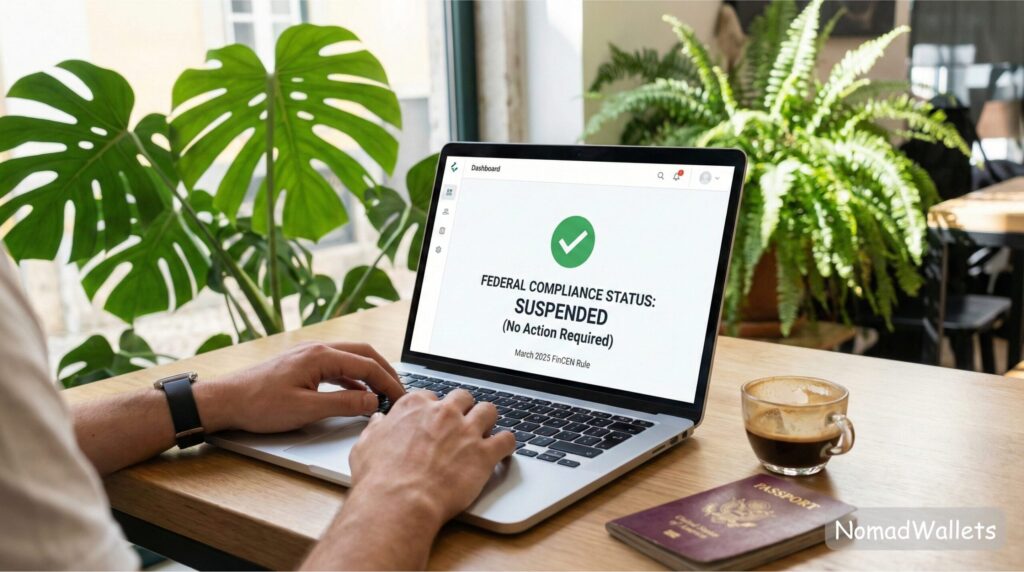
This is the most important section of this guide. If you are asking, “Do I need to do BOI Reporting 2026 for my Wyoming LLC?”, the answer under current rules is: Not at this time.
Definition of “Domestic Reporting Company” (Current Status)
The March 2025 Interim Final Rule effectively suspended the reporting requirement for entities created in the United States.
“Thus, through this interim final rule… This “exemption” is regulatory in nature and reflects FinCEN’s current enforcement posture, not a permanent statutory carve-out enacted by Congress..” [Source: FinCEN Interim Final Rule, March 2025]
It is crucial to understand the language here. While FinCEN uses the word “exempt” in press materials, in practice, this is being implemented through a suspension of enforcement rather than a statutory repeal. It means that as of January 2026, FinCEN is not enforcing the collection of this data from US-born entities.
Practical Examples of Suspended Requirements
For most digital nomad business structures, this means you do not need to file a report so long as this rule remains in effect. Let’s look at specific scenarios:
Scenario 1: The Classic Nomad (Wyoming LLC)
- Profile: Sarah is a freelance designer. She formed a Wyoming LLC to handle her invoicing. She lives in Mexico City.
- Old Rule: She had to file BOI and update it every time she moved.
- Current 2026 Status: NOT REQUIRED (Enforcement Suspended). Her entity is domestic (created in Wyoming).
Scenario 2: The Tech Startup (Delaware C-Corp)
- Profile: Mark and Jen launched a SaaS app. They incorporated in Delaware to issue stock to investors.
- Old Rule: They had to report themselves and any investor with >25% ownership.
- Current 2026 Status: NOT REQUIRED (Enforcement Suspended). The C-Corp is a domestic entity.
Scenario 3: The “Series” LLC (Texas)
- Profile: A real estate investor uses a Texas Series LLC to hold multiple properties.
- Old Rule: Potential ambiguity on whether each “series” had to file separately.
- Current 2026 Status: NOT REQUIRED (Enforcement Suspended). The parent and series are domestic entities.
(Thinking about incorporating? Check out our comparison of Best US States for Nomad LLCs to see why Wyoming remains a top choice).

Do I Need to File an “Exemption” Form?
No. This is a common point of confusion. Digital nomads are used to the IRS, where you often have to file a form (like Form 8832 or 2553) to elect a specific status.
With BOI Reporting 2026, there is no form to claim this suspension. You do not need to log into the FinCEN BOI E-Filing system and check a box saying “I am exempt.” You simply do nothing. In fact, filing a report when you are not required to do so can actually create unnecessary liability, as you would then be responsible for keeping that (unnecessary) report updated.
The “Foreign Focus”: Who Must Still File BOI Reporting 2026?
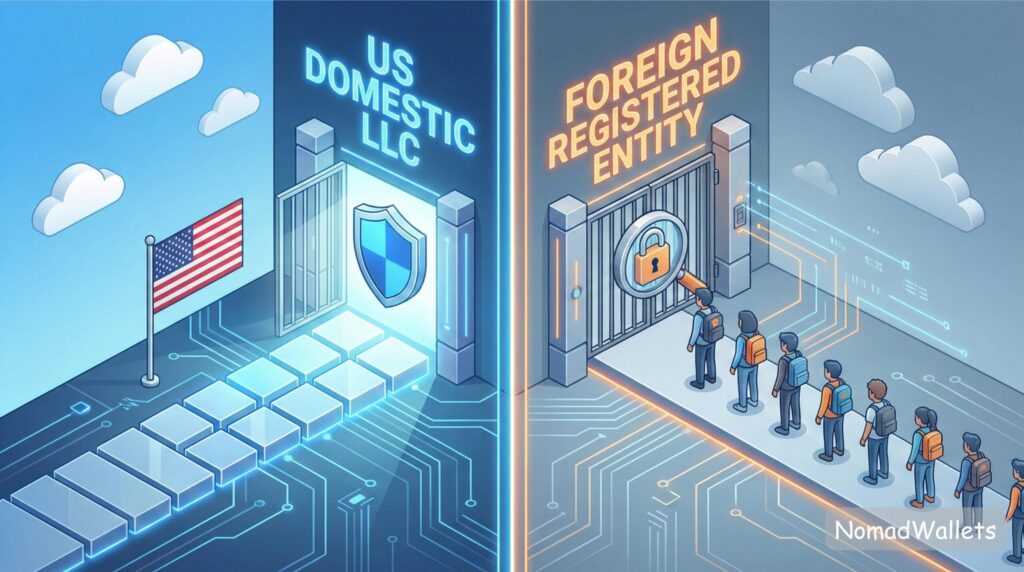
While domestic entities are currently off the hook, the BOI Reporting 2026 regime remains active for Foreign Reporting Companies. If your business was born outside the US but lives here legally, you are likely still in the net.
What is a Foreign Reporting Company?
A Foreign Reporting Company is defined as an entity that is:
- Formed under the law of a foreign country (not a US state).
- AND registered to do business in any US state or tribal jurisdiction.
The “Registration” Trigger: This is the key distinction. Merely being a foreign company doesn’t trigger BOI Reporting 2026. You must have formally “qualified” or “registered” that foreign entity in a US state.
Scenario A: The “Pure” Foreign Entity (Safe)
- Setup: You have a UK Limited Company. You have US clients who pay into your Wise Business account (UK details). You have never filed paperwork with a US Secretary of State.
- Verdict: You are NOT a reporting company. You are a foreign entity with no US nexus for corporate registration purposes. You can operate freely without FinCEN reporting.
Scenario B: The “Registered” Foreign Branch (Danger)
- Setup: You have a Singapore Pte Ltd. You wanted to open a physical branch in Miami or needed a US EIN for a specific contract, so you filed a “Foreign Qualification” with the Florida Division of Corporations.
- Verdict: You MUST file BOI Reporting 2026. Because you registered in a US state, the requirement applies to you.
Am I Required to File?
| Scenario | Entity Type | Registered in US State? | BOI Reporting 2026 Status |
| Typical Nomad | Wyoming LLC | Yes (Formed there) | NOT REQUIRED (Domestic – Enforcement Suspended) |
| Freelancer | Sole Proprietorship | No | NOT REQUIRED (Not an entity) |
| UK Nomad | UK Ltd Company | No | NOT REQUIRED (Foreign, Unregistered) |
| E-Commerce | Hong Kong Ltd | Yes (Registered in FL) | MUST FILE (Foreign, Registered) |
| Tech Startup | Delaware C-Corp | Yes (Formed there) | NOT REQUIRED (Domestic – Enforcement Suspended) |
The “US Person” Reporting Exclusion
The March 2025 rule introduced a specific exclusion for Foreign Reporting Companies regarding their owners. This was designed to avoid the constitutional issues raised in NSBU v. Yellen.
The rule states that foreign entities generally do not need to report U.S. persons as beneficial owners. This is not a “loophole,” but a specific reporting exclusion. This exclusion is based on FinCEN’s current interpretation and enforcement posture and may evolve through future rulemaking or litigation.
What this means: If you are a US citizen digital nomad owning a UK Ltd (that is registered in Wyoming):
- The UK Ltd IS a reporting company because it is foreign registered.
- However, when you list the “Beneficial Owners,” you (the US citizen) are excluded from the list.
- You would only report foreign beneficial owners (if any). If the company is 100% owned by US citizens, the report might contain Company Applicant info but zero Beneficial Owners.
The New Threat: State-Level “Mini-CTAs”
Just when the federal picture clears up, the state picture gets cloudy. In the US federal system, states have independent authority to regulate businesses formed within their borders. When FinCEN backed down, several states stepped up.
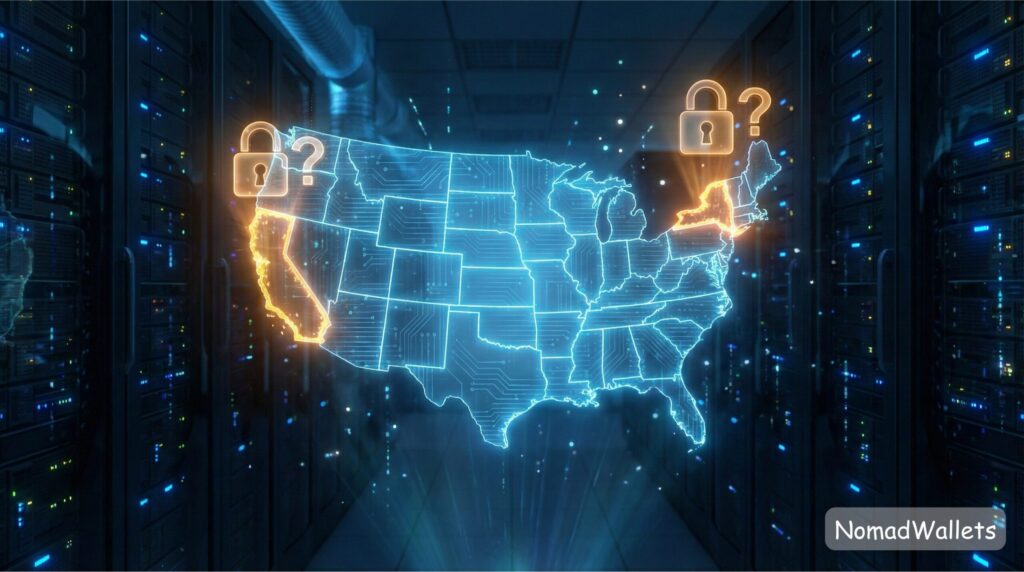
This is the biggest potential pain point for 2026. You might be exempt federally, but liable locally.
The New York LLC Transparency Act (NYLTA)
Effective January 1, 2026, the NYLTA requires beneficial ownership disclosure.
- Current Status: Historically, New York legislation has mirrored federal standards. However, with the recent divergence in federal enforcement, it is unclear if New York will follow FinCEN’s lead in suspending domestic reporting.
- The Risk: If NY decides to enforce its own transparency mandate despite the federal pause, NY LLC owners may still have to disclose ownership to the state.
- Privacy Difference: Originally, New York wanted a public database. This was amended. The database is now private, accessible only by law enforcement, similar to the federal system.
- Action Item: If you have a NY LLC, check the NY Department of Financial Services guidance frequently. As of January 2026, New York has not issued formal guidance confirming whether it will mirror the federal suspension for domestically formed LLCs.
California (SB 1201) & Massachusetts
California has been aggressive about “closing the gap” left by the federal retreat. Senate Bill 1201 (and subsequent amendments) aims to collect ownership data for any entity doing business in California.
- The Danger: California’s definition of “doing business” is notoriously broad. If you are a nomad living in California for part of the year, CA may claim you are “doing business” there, triggering state-level reporting.
Federal vs. State Transparency Rules
| Feature | Federal (FinCEN) | New York (NYLTA) | California (Proposed) |
| Scope | Foreign Entities Only | NY LLCs + Foreign | CA LLCs + Foreign |
| Domestic LLCs | Enforcement Suspended | Subject to NYLTA – Guidance Pending | Likely Included |
| Public Database? | No (Law Enforcement only) | No (Private database) | Unknown |
| Effective Date | Active Now | Jan 1, 2026 | Pending 2026 |
*Note: “Subject to NYLTA” refers to state-level disclosure obligations only and does not override the current federal FinCEN enforcement suspension.
Detailed Walkthrough: If You DO Have to File (Foreign Entities Only)
For the small percentage of readers operating Foreign Reporting Companies (e.g., a Canadian Nomad with a US-registered branch), the system is still active. Here is exactly how to file without paying a lawyer $500.
Step 1: Get a FinCEN Identifier
A FinCEN Identifier is a unique 12-digit ID number.
- Why you need it: Instead of uploading your passport image to every single company report you are involved with, you upload it once to FinCEN, get a number, and use that number on future forms.
- How to get it: Go to the FinCEN ID portal, create an account via Login.gov, and submit your details.
Step 2: Gather Required Information
Before you start the filing, have these ready:
- Company Legal Name: exactly as it appears on the foreign registration document.
- DBA (Doing Business As): If you use a trade name in the US.
- US Address: This must be a street address in the US. A P.O. Box is generally rejected. If you use a Registered Agent, ensure they allow their address to be used for this specific purpose (some do not).
- Tax ID: Your EIN (Employer Identification Number).
Step 3: The Beneficiary Details (Non-US Only)
Remember the reporting exclusion: You generally only report Non-US Beneficial Owners.
- Full Legal Name.
- Date of Birth.
- Residential Address: This must be your current home address (not a business address).
- ID Document: A clear image (JPG/PDF) of a non-expired passport or foreign driver’s license.
Step 4: File Online
Go to the Official BOI E-Filing System.
- Select “File PDF BOI Report” (Recommended) or “File Online BOI Report.”
- Filing Type: “Initial Report.”
- Fill in the fields.
- Submit.
- Download the Transcript: Once submitted, you will get a confirmation transcript. Save this. It is your only proof of compliance.
The Penalties: Are They Still Real?

These penalties remain in statute but currently apply only where BOI reporting obligations are actively enforced, primarily for foreign reporting companies. The March 2025 rule paused domestic enforcement but did not remove the statutory penalties for non-compliance where reporting is still required.
Civil Penalties
- $591 per day (Indexed for inflation).
- This fine accrues for every single day the report is late. If you forget to file for 3 months, that is roughly $53,000.
- Good Faith Exception: FinCEN has stated in guidance that they are focusing enforcement on “willful” violators, not those who make accidental mistakes. However, ignoring the law entirely is risky.
(Don’t let fines ruin your budget. Use our Nomad Cost of Living Calculator to plan your finances safely.)
Criminal Penalties
- Up to $10,000 in fines.
- Up to 2 years imprisonment.
- Note: Criminal charges are reserved for “willful” violations i.e., you knew you had to file and chose not to.
Frequently Asked Questions (FAQ) about BOI Reporting 2026
Q1: I have a Wyoming LLC for my freelance business. Do I need to file BOI in 2026?
A: Not at this time. Under the March 2025 Interim Final Rule (published March 26, 2025), FinCEN is not requiring filings from domestic reporting companies.
Q2: I filed my BOI report in 2024. Do I need to update it now?
A: No. So long as the Interim Rule suspending domestic reporting remains in effect, FinCEN is not requiring updates or corrections to previously filed reports for domestic entities. You do not need to “withdraw” the report.
Q3: I am a US citizen, but I live in Thailand. Does my residency affect the requirement?
A: No. The requirement is based on where the company was formed. A Wyoming LLC is considered “domestic” regardless of where its owner lives, and thus falls under the current enforcement suspension.
Q4: Is this “exemption” permanent?
A: No. It is not a statutory repeal. It is a regulatory suspension of enforcement implemented through an Interim Final Rule. This means it is the current binding regulation, but it could be revised by future Treasury actions or court rulings. We recommend checking back annually.
Q5: What if I have an “Inactive” LLC?
A: Inactive domestic LLCs fall under the same general suspension as active ones. You do not need to take any specific action for an inactive domestic entity under current rules.
Q6: Does this affect my taxes?
A: No. BOI Reporting 2026 is completely separate from the IRS. You must still file your Forms 5472, 1120, or 1040 regardless of this FinCEN suspension.
Conclusion: A Regulatory Breather
The saga of BOI Reporting 2026 has been a lesson in regulatory volatility. For two years, digital nomads prepared for a surveillance state; today, we have a significant reprieve.

Key Takeaways for 2026:
- Current Status: Domestic U.S.-formed entities are currently not subject to BOI filing requirements due to a FinCEN enforcement suspension.
- Foreign Risk: Foreign entities registered in the US must still file.
- Vigilance: Watch your State laws (especially NY, CA, MA) as enforcement guidance evolves.
You started this article worried about a $500 daily fine. You can now proceed with confidence, knowing that for most US nomads, the federal compliance burden has been lifted at least for now.
Sources & Citations
- [FinCEN.gov]: “Interim Final Rule regarding Beneficial Ownership Information Reporting Requirements,” March 2025. (See Press Release)
- [FederalRegister.gov]: “Beneficial Ownership Information Reporting Requirement Revision,” published March 26, 2025. (See Full Text)
- [NY.gov]: “New York LLC Transparency Act Guidance, 2026.” (See Analysis)
- [USCourts.gov]: National Small Business United v. Yellen, Case No. 5:22-cv-01448.
(Disclaimer: I am a nomad finance expert, not an attorney. This content is for educational purposes based on the regulations active as of January 2026. Laws change. Always verify with a qualified CPA or corporate attorney.)

Hi, I'm Tushar, founder of NomadWallets.com. I created this site after realizing how complicated managing money becomes once you start living and working across multiple countries. Most financial advice online is written for people who never leave their home country, which leaves digital nomads navigating international banking, transfers, taxes, and visas with very little reliable guidance.
NomadWallets exists to provide clear, practical, research-backed financial information for location-independent professionals worldwide. Every article published on this site is researched using official sources, live platform data, and global benchmarks such as World Bank remittance reports. Our research covers international banking, cross-border payments, and financial infrastructure for digital nomads.