Introduction: When the Sky Closes
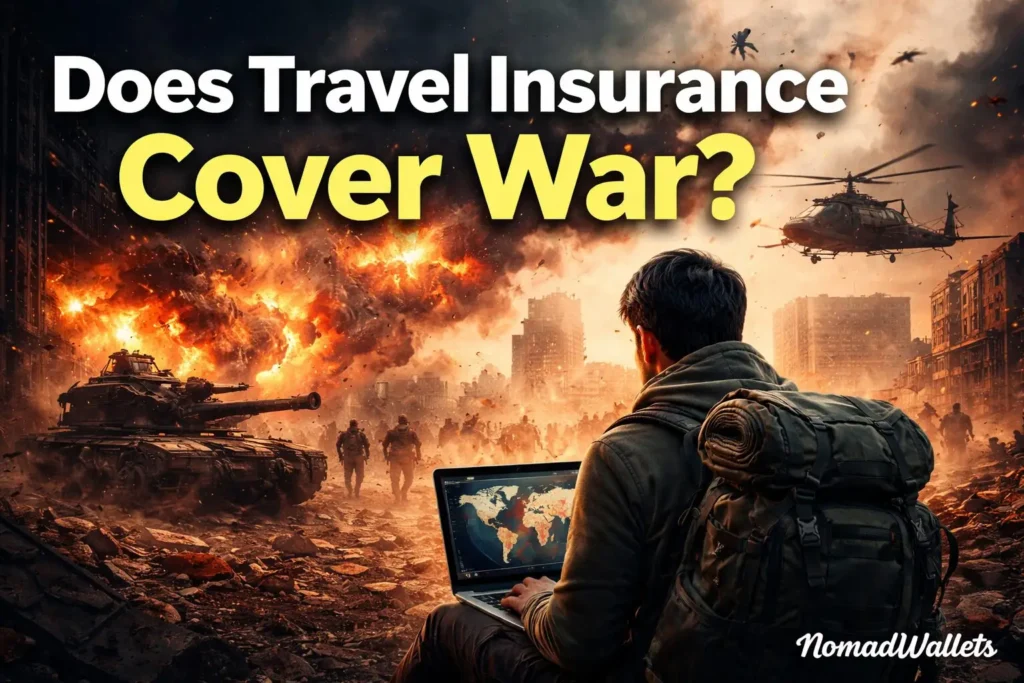
It is March 2026, and the geopolitical thermometer is flashing red. Tensions between Iran and the United States have escalated beyond diplomatic cables, flight routes over the Middle East are suddenly restricted, airlines are rerouting at tremendous fuel cost, and digital nomads who booked “stable” co‑living spaces in Dubai, Istanbul, or even parts of Eastern Europe are scrambling to understand one terrifying question: does travel insurance cover war when the bombs start falling, or when the airspace simply shuts down?
The uncomfortable truth is that most nomads assume their insurance policy is a magical shield. Buy the plan, get a medical evacuation, and sleep soundly. But in 2026’s volatile climate, that assumption is not just naive; it is financially dangerous. Standard nomad insurance, whether you rely on SafetyWing, Genki, or similar providers, is not designed for total war.
It is designed for predictable risks: a broken leg in Bali, a stolen laptop in Lisbon, a sudden illness in Tbilisi. When geopolitical chaos erupts, the fine print awakens, and coverage often vanishes precisely when you need it most.
This article cuts through the marketing gloss. We will dissect the war risk clause, explain why insurers exclude large‑scale conflict, reveal the “listed area” trap that can cancel your policy overnight, and provide actionable strategies to stay protected, even when the world feels like it is tipping into chaos.
If you are a digital nomad in 2026, you owe it to yourself to read this before your next flight.
The Illusion of Coverage
There is a dangerous cognitive gap between what travelers think insurance does and what it actually does. Most people operate under a simple equation: premium paid = full protection. They imagine a scenario where conflict breaks out, they call their insurer, and a private jet arrives to whisk them to safety while the claims team reimburses every cancelled flight and lost deposit.
Reality check: Insurance is not a geopolitical safety net. It is a risk‑pooling mechanism built on actuarial predictability. When events become unpredictable, like a sudden war, a civil uprising, or a state‑wide sanctions regime, the mathematical models break down. Insurers cannot price a risk they cannot quantify, and they certainly cannot absorb billions in simultaneous losses from a single conflict zone.
💡 Pro Tip: Insurance is designed for predictable risks, not geopolitical chaos. If your plan promises “complete peace of mind” without mentioning war exclusions, you are not reading the full document.
What Is the “War Risk” Clause?
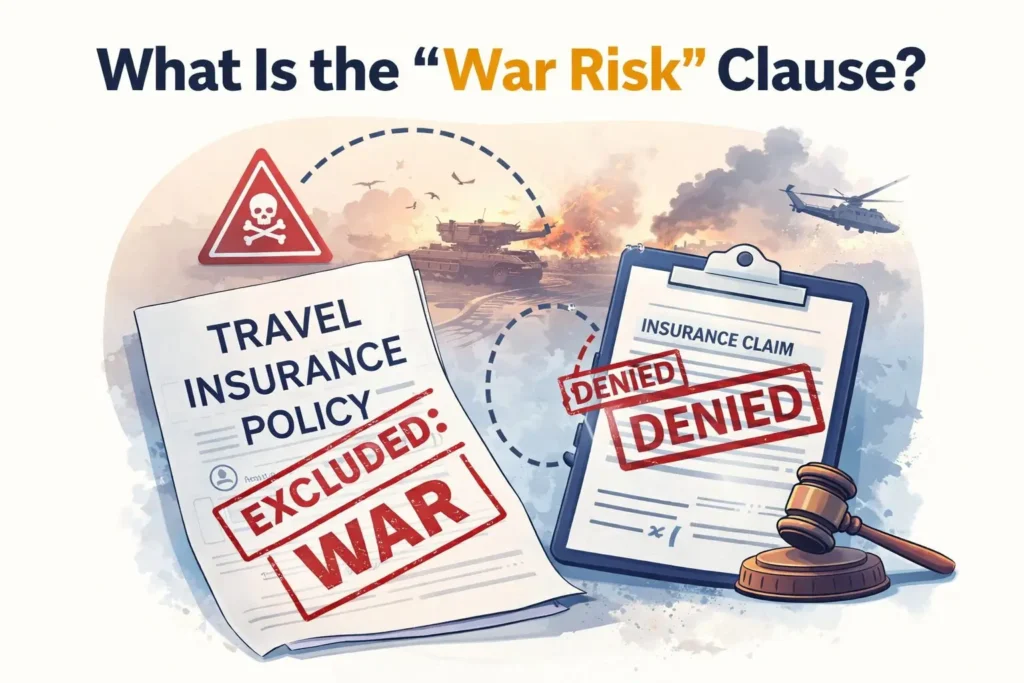
At the heart of every travel and nomad insurance policy lies the war risk clause: a contractual provision that excludes or limits liability for losses arising from armed conflict, invasion, acts of foreign enemies, civil war, insurrection, or (in some policies) terrorism.
Key Characteristics of the War Risk Clause:
- Universal Presence: It appears in virtually every standard travel insurance policy, including those marketed to digital nomads.
- Hidden in Plain Sight: Often buried in the “Exclusions” or “General Conditions” section, not in the glossy marketing summary.
- Trigger Events: The clause activates not only when a formal war is declared, but also when a government issues a travel advisory, when airspace is closed, or when a region is deemed “active conflict” by the insurer’s risk assessment team.
In simple terms, if your flight is cancelled because a missile was fired 200 miles away, or if you cannot enter a country due to sudden sanctions, does travel insurance cover war‑related disruption? Almost always, the answer is no. The war risk clause will likely exclude reimbursement for those losses.
This aligns with standard travel insurance exclusions outlined by the Insurance Information Institute, where war, invasion, and civil unrest are explicitly excluded from coverage.
Why War Is Excluded (Financial Intelligence Breakdown)
Why don’t insurers simply charge a higher premium and cover war? The answer lies in the nature of tail risk: a statistical term for low‑probability, high‑impact events that lie far outside normal distribution curves.
War is the textbook definition of a tail risk:
- Unpredictability: Even intelligence agencies struggle to predict the exact trigger of a conflict.
- Correlation of Loss: Unlike a random accident that affects one person, a war affects thousands of policyholders simultaneously. If a carrier covers 10,000 nomads in a region that descends into war, the payout could exceed the entire premium pool for the year.
- Uncontrollable Exposure: Insurers can price the risk of a car accident or a slip‑and‑fall because they understand the variables. They cannot control geopolitics, diplomatic cables, or military escalations.
💡 Insight: War is a “tail risk”, meaning it breaks traditional insurance models. When an event is uninsurable, it is not because the company is greedy; it is because the risk cannot be mathematically priced or pooled without bankrupting the insurer.
This reflects how insurers model extreme risks within broader global risk environments, where large-scale instability cannot be reliably priced.
Industry-wide, most travel insurance policies exclude war-related risks due to their unpredictable and catastrophic financial impact.
The “Listed Area” Trap
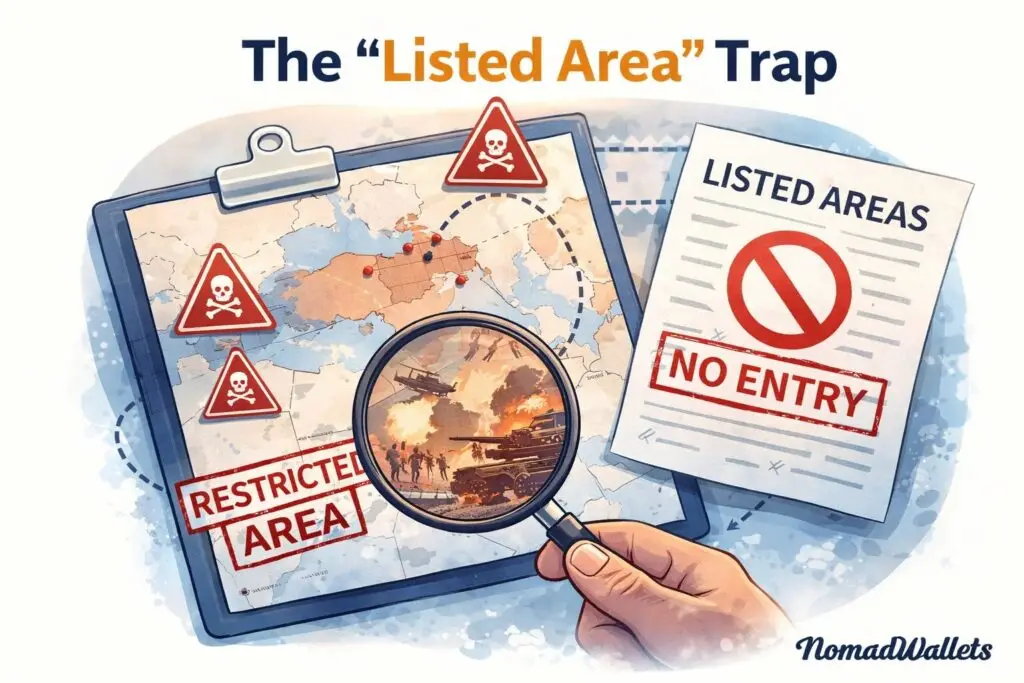
One of the most insidious features of modern nomad insurance is the Listed Area (or “High‑Risk Region”) designation. Insurers maintain dynamic lists of countries or zones where coverage is restricted or excluded due to elevated risk.
How the Trap Works:
- Overnight Changes: A country can move from “standard coverage” to “listed area” with zero notice to the traveller, sometimes based on a government travel advisory update at midnight.
- Mid‑Stay Cancellation: You might arrive in a city that is perfectly safe, only to have the insurer exclude the entire region a week later because conflict escalates 50 miles away.
- Advisory‑Driven Triggers: These lists are often tied to official government advisories (e.g., US State Department Level 4, UK FCO “Avoid All Travel”). If the advisory changes, your coverage can change, even if you are already there.
These classifications are often based on official frameworks like US travel advisory levels and UK FCDO travel advice, which insurers actively monitor.
⚠️ Important: You may enter a destination fully covered and lose that coverage mid‑stay if the insurer updates the risk zone. Always check your provider’s “listed areas” before you book, and monitor them while you travel.
What Happens When War Starts (Step‑by‑Step)
To make this concrete, imagine you are a digital nomad in March 2026. Here is a realistic timeline of how coverage collapses when conflict ignites:
- You are in a “Stable” Country: You are working from a café in Georgia (the country), feeling safe. Your SafetyWing or Genki plan is active.
- Conflict Escalates Nearby: Tensions flare on the border, or a regional power initiates strikes. Flights begin to cancel; airlines avoid certain airspaces.
- Airspace Restrictions Begin: Your route home is no longer available. You need to reroute through a third country, costing thousands.
- Insurer Updates “Risk Zone”: The insurer classifies the region as a “listed area” or triggers the war risk clause due to the active conflict.
In practice, these updates are triggered in response to real-time security risks and airspace restrictions and aviation safety risks defined by global aviation authorities like IATA.
- Outcome:
- Claims for cancelled flights or non‑refundable accommodation are denied.
- Your medical coverage might still apply for accidental injury, but not if the injury is caused by war (e.g., shrapnel, crossfire).
- Evacuation coverage is unclear if you need to escape, standard policies rarely pay for “political evacuation.”
In this scenario, does travel insurance cover war‑induced losses? Almost never. You are left to absorb the financial shock alone.
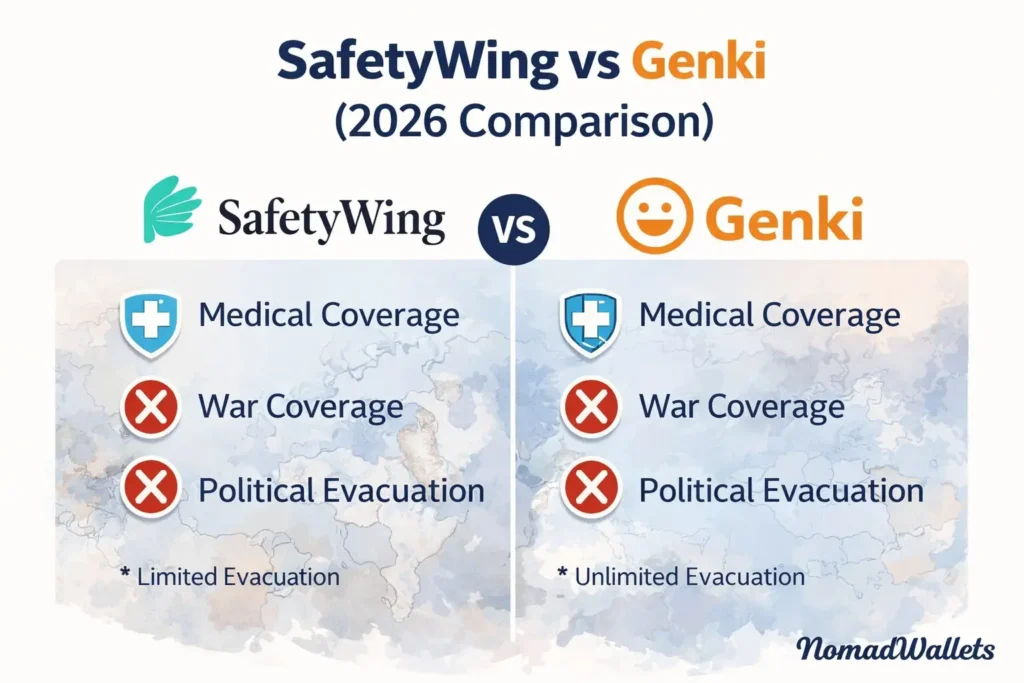
SafetyWing vs Genki (2026 Comparison)
As of 2026, two providers dominate the digital nomad insurance conversation: SafetyWing and Genki. Both are excellent for medical coverage and global travel, but their stance on war is nearly identical and deeply limiting.
| Feature | SafetyWing (2026) | Genki (2026) |
| War Coverage | ❌ Excluded (standard war risk clause) | ⚠️ Limited (excludes direct war acts) |
| Medical Evacuation | ✅ Yes (if medically necessary) | ✅ Yes (if medically necessary) |
| Political Evacuation | ❌ No (not covered) | ❌ No (not covered) |
| Listed Areas | Strict (follows government advisories) | Moderate (but still excludes active conflict) |
| Civil Unrest | ❌ Excluded if it turns violent | ⚠️ Case‑by‑case, usually excluded |
| Price (approx.) | $45–$60/month | $40–$55/month |
According to official policy documents, SafetyWing policy wording and Genki product terms indicate that war and large-scale conflict are generally excluded or heavily restricted under standard coverage conditions.
💡 Note: Both follow the same core rule: war is largely excluded. Neither policy will pay to fly you out of a country because it is becoming unsafe politically. They will only cover medical evacuation if you are physically ill or injured and the evacuation is medically necessary, not because you want to escape a war zone.
The Evacuation Myth (Critical Section)
Perhaps the most dangerous misconception among nomads is the belief that “my insurance will fly me out if things get dangerous.” This is only half true, and the distinction matters between life and bankruptcy.
Medical Evacuation vs. Political Evacuation
- Medical Evacuation: Covered by most plans (including SafetyWing and Genki). You are unconscious, have a severe injury, or require hospital care unavailable locally. A private air ambulance (or commercial flight + medical escort) is arranged to get you to adequate care.
- Political Evacuation: Not covered by standard travel insurance. This is when you need to leave because the country is collapsing, not because you are sick. It involves securing flights, hotels, and safe passage out of a conflict zone.
If war breaks out and you are healthy but terrified, does travel insurance cover war‑related escape? No. You must pay for your own exit, or rely on government repatriation flights, which may take weeks and offer no compensation for lost belongings or cancelled contracts.
Real Risk Zone: The Grey Area
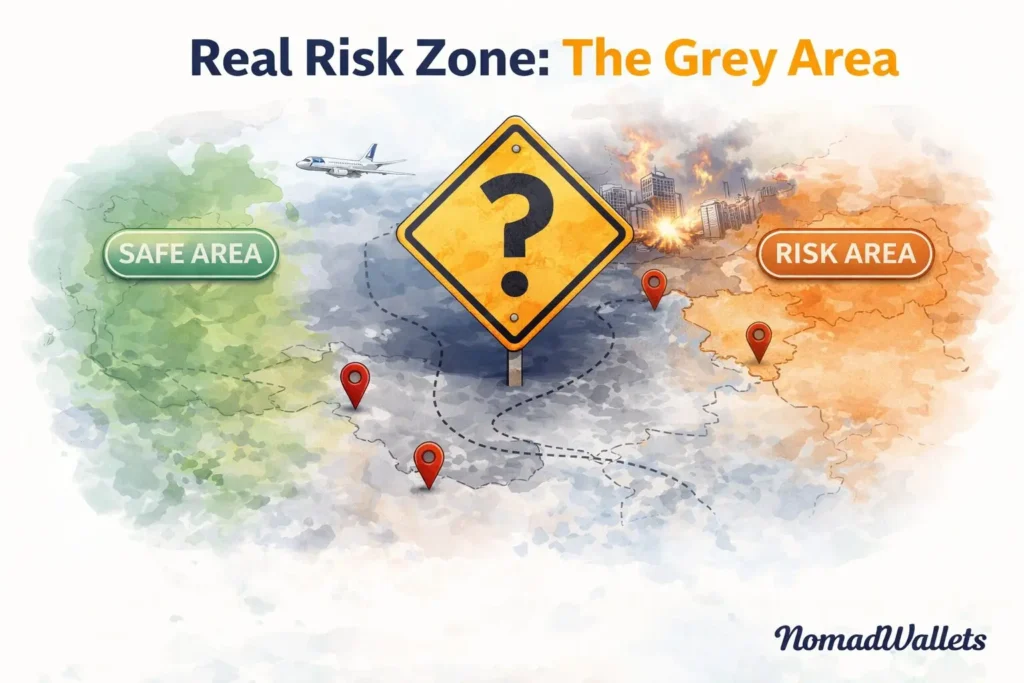
Not every dangerous region is technically “at war,” yet these grey zones are where most nomads actually lose money or get stranded in 2026.
Consider these scenarios:
- Drone Strikes: A civilian area is hit by drones, but no formal war is declared.
- Sanctions: Overnight, banking sanctions make it impossible to receive income or pay rent.
- Rising Instability: Protests turn violent; embassies close; no active fighting, but the rule of law is collapsing.
👉 This is where most nomads are exposed, because insurers often argue these events fall under “civil unrest” or “political violence”, exclusions that sit right next to the war clause. You might not see tanks, but your ability to work, travel, or access your bank account can vanish overnight.
Smart Strategies for Nomads (Actionable)
You cannot insure against every geopolitical earthquake, but you can build resilience. Here are five non‑negotiable strategies for 2026:
- Location Strategy
Avoid regions with high geopolitical volatility, especially if your income depends on stable internet and banking. Diversify your “base” countries, never park all your life in one fragile zone. - Exit Planning
Always have a 48‑hour exit plan. Know the nearest stable embassy, the fastest transit routes, and which countries currently allow visa‑on‑arrival for your passport.
👉 Dubai exit strategy - Financial Backup
Keep 3–6 months of expenses in a stable, globally accessible account. If sanctions hit or local banks freeze, you need liquidity to buy a last‑minute flight.
👉 Budget tracking - Insurance Layering
Use a base medical/nomad plan (SafetyWing/Genki) plus a specialized crisis evacuation policy from a provider that explicitly covers political evacuation (rare, but exists for high‑risk professionals).
👉 Travel insurance guide - Banking Flexibility
Rely on mobile banks and fintech that are not tied to any single country’s sanctions regime. Ensure you can receive USD/EUR/GBP instantly without local intermediary banks.
👉 Mobile banking
Red Flags in Insurance Policies
When reviewing any policy in 2026, watch for these warning signs that your coverage will evaporate exactly when you need it:
- Vague Language: Phrases like “excludes events beyond our control” or “acts of war and similar perils” without clear definitions.
- No Evacuation Clarity: The policy mentions “evacuation” but never specifies political vs. medical.
- Extremely Low Pricing: If a plan costs $20/month for “global coverage,” it is almost certainly excluding war, terrorism, and civil unrest.
- No Real‑Time Support: No 24/7 crisis hotline, or no dedicated “war zone” response team.
- Automatic Cancellation: Clauses that allow the insurer to cancel your policy immediately if a government advisory changes.
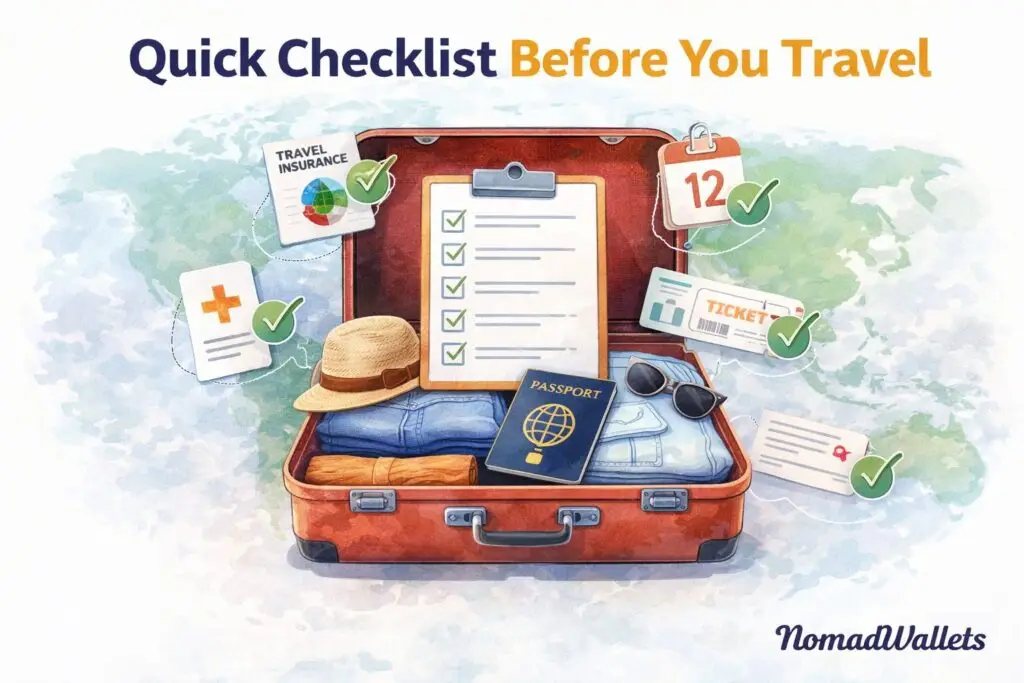
Quick Checklist Before You Travel
Before booking that flight to a new nomad hub, run through this checklist:
- Is this region geopolitically stable? Check multiple government travel advisories (US, UK, EU).
You can verify this using US travel advisory levels or UK FCDO travel advice.
- Does my policy mention war exclusions? Read the “Exclusions” section, do not trust the summary.
- What triggers coverage cancellation? Understand how “listed areas” are defined and updated.
- Can I exit within 48 hours? Do I have the funds, passport validity, and route to leave quickly?
- Do I have a financial buffer? At least $5,000–$10,000 accessible outside the local banking system.
FAQ: Does Travel Insurance Cover War
Q1: Does travel insurance cover war?
A: Usually no. War is explicitly excluded in almost all standard travel and nomad insurance policies through the “war risk clause.” Losses arising from declared war, invasion, or civil conflict are typically denied.
This is consistent across the industry and supported by standard travel insurance exclusions, where events such as war, civil unrest, and geopolitical instability are commonly excluded from coverage.
Q2: What happens if war starts while traveling?
A: If conflict begins after you arrive, your insurer may reclassify the region as a “listed area” and restrict or cancel coverage. Existing claims for war‑related damage (e.g., flight cancellations, injury from combat) are likely to be denied. Medical coverage for non‑war injuries may continue, but evacuation for safety alone is not covered.
Q3: Does insurance cover evacuation during war?
A: Only medical evacuation (if you are sick or injured) is typically covered. Political evacuation, fleeing a war zone because it is unsafe, is not included in standard SafetyWing, Genki, or similar plans. You would need a specialized crisis evacuation policy for that.
Q4: Is it safe to travel during the Iran–US conflict?
A: Safety depends entirely on your specific location, proximity to flashpoints, and current flight routes. Many regions (e.g., most of Europe, Southeast Asia) remain unaffected, but the Middle East, Persian Gulf, and surrounding airspaces carry heightened risk. Always check real‑time government advisories and maintain a flexible exit plan.
Q5: Which insurance is best for conflict zones?
A: No single standard policy fully covers war. For high‑risk travel, combine a robust medical plan with a specialized political evacuation policy from a provider that explicitly covers crisis extraction. Even then, read the exclusions carefully, does travel insurance cover war‑related losses? Only if the policy explicitly says so, which is rare.
How This Analysis Was Built (Sources & Methodology)
This analysis is based on:
- Reviewed policy documents from SafetyWing & Genki (latest 2026 editions), focusing on exclusions, listed areas, and evacuation definitions.
- Real nomad risk scenarios from the past 24 months, including events in the Middle East, Eastern Europe, and the Caucasus.
- Cross‑referenced with government travel advisories (US State Department, UK FCO, and EU travel security alerts) to ensure alignment with how insurers define “high‑risk” zones.
Sources and Citations
The insights in this article reflect current industry standards based on official insurer documentation and government travel advisories.
Policy details were reviewed directly from SafetyWing policy wording and Genki insurance terms, particularly focusing on exclusions related to war, conflict zones, and evacuation limitations.
These findings were cross-referenced with official government travel guidance, including U.S. State Department Travel Advisories, UK Foreign Travel Advice (FCDO), and European Union travel safety updates, to align with how insurers define high-risk or restricted areas.
Additional context is informed by recent geopolitical developments affecting global airspace, sanctions, and cross-border mobility patterns as of 2026.
⚠️Disclaimer
This article is for informational purposes only and does not constitute financial, legal, or insurance advice. Insurance coverage varies significantly by provider, specific policy wording, and the date of issuance. Always review your exact plan documents and consult directly with your insurer before making travel decisions in high‑risk regions or during periods of geopolitical instability.

Conclusion: Plan for the Worst, Hope for the Best
In 2026, the world is more interconnected, and more volatile than ever. The romantic notion that a monthly insurance premium guarantees safety in any circumstance is a dangerous fantasy. Does travel insurance cover war? The honest answer: almost never, not in the way you hope.
The war risk clause is real, pervasive, and designed to protect insurers from exactly the kind of black‑swans that threaten digital nomads today. But you are not powerless. By understanding the exclusions, avoiding the “listed area” trap, layering your financial and evacuation plans, and staying hyper‑aware of geopolitical shifts, you can navigate the chaos without losing your life savings, or your life.
Stay informed, stay flexible, and never assume your policy will save you when the missiles fly. In the game of global risk, knowledge is the only insurance that truly pays out.
In 2026, smart nomads don’t just buy insurance. They understand its limits before it’s too late.

Hi, I'm Tushar, founder of NomadWallets.com. I created this site after realizing how complicated managing money becomes once you start living and working across multiple countries. Most financial advice online is written for people who never leave their home country, which leaves digital nomads navigating international banking, transfers, taxes, and visas with very little reliable guidance.
NomadWallets exists to provide clear, practical, research-backed financial information for location-independent professionals worldwide. Every article published on this site is researched using official sources, live platform data, and global benchmarks such as World Bank remittance reports. Our research covers international banking, cross-border payments, and financial infrastructure for digital nomads.