


Imagine this: You’re working from a Dubai co-working space, your visa is valid for another two months, and you receive a notification that all flights heading north have been suspended. The Strait of Hormuz, already a geopolitical flashpoint, has become a no-fly zone. Your phone buzzes with messages from fellow digital nomads asking: “What do we do now?”
This isn’t fear mongering. It’s preparation.
The Strait of Hormuz handles roughly 20% of the world’s oil shipments, and Dubai’s position as a major transit hub means any regional disruption ripples through aviation, finance, and daily life almost instantly. Whether you’re on a tourist visa, a freelance permit, or a residency visa, having a clear Dubai exit plan isn’t paranoia, it’s practical risk management.
This guide gives you a step-by-step Dubai exit plan for digital nomads, covering flights, visas, and money, so you’re not making decisions under panic. We’ll walk through what actually happens during disruptions, your visa options, how to protect your funds, and a 24-hour action plan you can use immediately.
In fast-moving situations, delays of even 12-24 hours can significantly reduce your exit options.
*This guide is based on common disruption patterns, expat experiences, and official UAE regulatory frameworks.
Why the Strait of Hormuz Matters for Dubai-Based Nomads
First, it helps to understand why this waterway matters to your daily life in the UAE.
The Strait of Hormuz is one of the world’s most critical chokepoints for global oil shipments. Approximately 20% of the world’s petroleum passes through this narrow passage between Oman and Iran. When geopolitical tensions rise, whether from regional conflicts, military activity, or diplomatic breakdowns, three things happen that directly affect digital nomads in Dubai:
- Flight routes shift or cancel. Airlines often suspend or reroute flights through the Gulf region when risk assessments change. Your direct flight to Europe or Asia might disappear overnight.
- Fuel prices spike. Aviation fuel costs affect ticket prices almost immediately, making last-minute exits expensive.
- Supply chains strain. Everything from groceries to office supplies can become scarcer or pricier during prolonged disruptions.
Dubai remains one of the world’s most connected cities, but that connectivity is a two-way street. When things go smoothly, you’re benefitting from global infrastructure. When they don’t, you’re exposed to rapid changes.
The good news? With a solid Dubai exit plan, you can stay ahead of the curve.
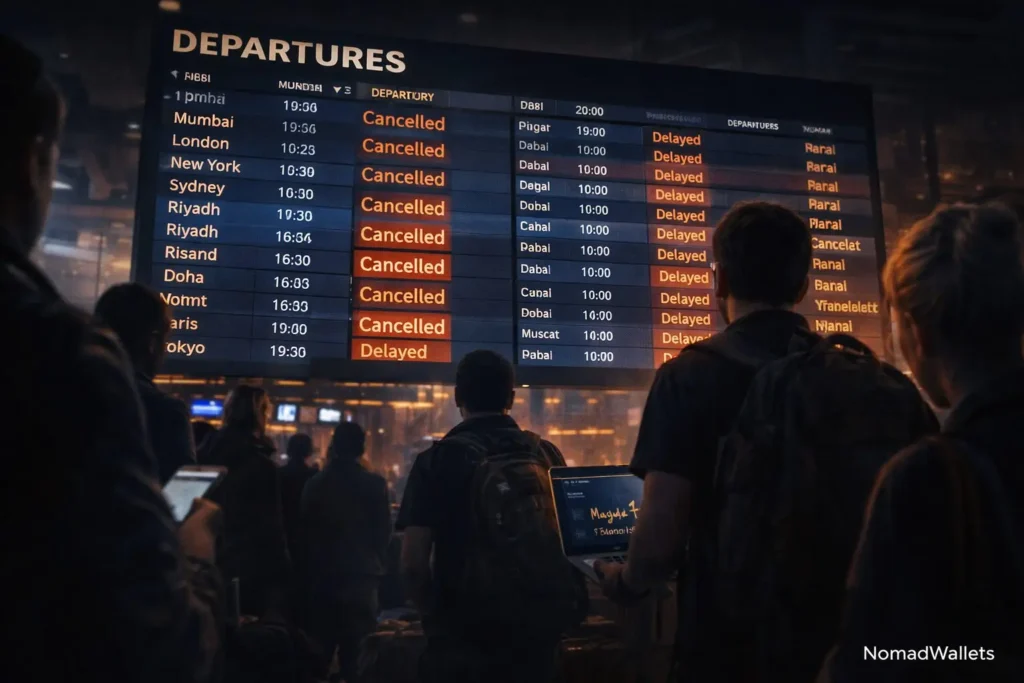
What Happens If Flights Stop in Dubai?
Let’s break down the realistic scenarios you might face and what each means for your exit options.
Immediate Impact (0-72 Hours)
When flight disruptions begin, here’s what typically unfolds:
Flight cancellations become widespread within hours. Airlines prioritize crew safety and regulatory compliance, meaning even minor security concerns can ground flights.
Ticket prices surge dramatically. Within 24 hours of a major disruption, remaining seats can cost 3-5x the normal price. This is why waiting “for a better deal” rarely works during a crisis.
Airport congestion increases. If only certain airlines or routes remain operational, terminals become crowded with stranded travelers competing for limited seats.
Here’s a practical breakdown of disruption scenarios:
| Situation | What Happens | Your Risk Level |
| Partial cancellations | Delays, rerouting, longer travel times | Medium |
| Airspace restrictions | Limited outbound flights, price spikes | High |
| Full airspace closure | No commercial flights in/out | Critical |
| Regional escalation | Evacuation routes severely limited | Critical |
What You Can Do
- Check multiple booking platforms simultaneously. Sites like Google Flights, Skyscanner, and direct airline apps show different availability.
- Consider nearby airports. Abu Dhabi, Muscat, and even Doha might have availability when Dubai is saturated.
- Don’t wait for “normal” prices. If you have a window to book, secure it. The cost of being stuck often far exceeds the ticket premium.
- Think land routes. If flights are grounded, consider whether you can drive to Oman or fly from a neighboring country’s airport.

Dubai Visa Grace Periods During a Crisis
Your legal status in the UAE becomes critical during any disruption; here’s how each visa type plays out.
Key Visa Scenarios:
Tourist Visa Holders
If you’re on a standard tourist visa (30 or 90 days), overstay penalties apply immediately after expiration. During normal times, you might get a grace period of 10 days, but during a crisis, these exceptions often disappear. The risk of fines, travel bans, or detention increases significantly.
Residency Visa Holders
If you hold a UAE residency visa (through employment, investment, or property), your status is more stable but not immune. Most residency visas require annual renewal, and if you’re between jobs, you typically have a grace period of around 30 days to either find new employment or change your visa status.
If you’re working remotely, understanding your Dubai virtual work visa options can help you plan your exit or transition more effectively.
Job Loss Situation
If you’re working remotely and your employment ends or if you’re on a freelance visa that gets cancelled, you have approximately 30 days to rectify your status. However, during a crisis, processing times can slow dramatically.
Important Notes on UAE Visa Rules
Rules can change rapidly during emergencies. What was flexible last month might not be this month. Always verify current regulations through official UAE government portals rather than relying on forum advice or social media posts.
Do not rely on visa flexibility. Don’t assume “it’ll be fine” with visa overstays. The UAE has become increasingly strict about visa violations, and the consequences (fines, blacklisting, and even jail time) aren’t worth the risk.

Managing Your Money During a Dubai Crisis
Financial infrastructure can fray during regional crises. Here’s how to protect yourself:
Money Access Risk (Liquidity Risks)
- ATM withdrawal limits may be imposed or networks may go down entirely
- Card failures abroad are common when banks implement security freezes during unusual activity
- Currency conversion issues can arise if the AED is pegged to a volatile currency situation
Smart Financial Moves
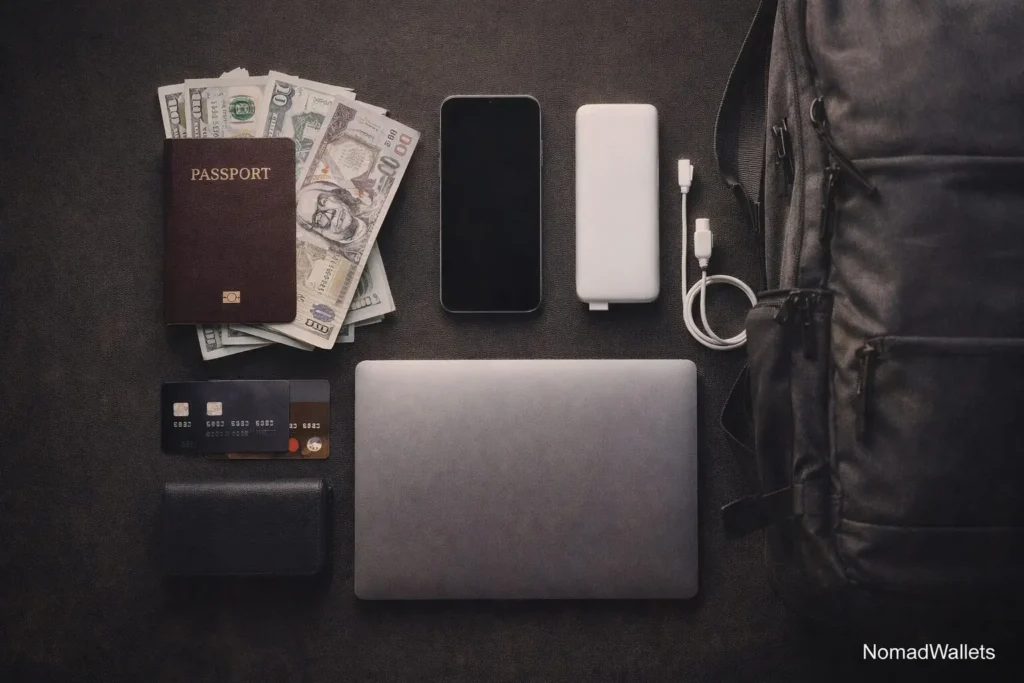
- Keep emergency cash accessible. Both AED and USD are ideal. USD is universally accepted and retains value during regional instability.
- Use multi-currency accounts. Services like Wise, Revolut, or other reliable mobile banking options for travelers help you stay flexible if one system fails.
- Diversify your banking access. Don’t keep all your funds in one bank. Spread across 2-3 institutions to reduce single-point-of-failure risk.
- Notify your bank of travel. This prevents your cards from being frozen when you make unusual transactions during an emergency.
Moving Money Fast (If Needed)
If you need to exit quickly and transfer funds, be aware that:
- Bank transfers can take 2-5 business days internationally, sometimes longer during crises
- Crypto can be a backup but comes with volatility risks and isn’t accepted everywhere
- International wallets like PayPal or Wise and other fast money transfer services for digital nomads can help you move funds quickly during emergencies.
The best strategy in any Dubai exit plan for digital nomads is to have accessible funds or easily movable within hours, rather than trying to orchestrate a transfer during an emergency.
24-Hour Dubai Exit Plan for Digital Nomads
This section is designed as your action checklist. If a crisis escalates, work through these steps methodically.
Within the First 6 Hours
- Check flight availability across all platforms. Look at Dubai, Abu Dhabi, and Muscat airports. Set alerts for any available seats.
- Confirm your visa expiry date. Pull up your visa details and note exactly when you need to leave or renew.
- Inform your bank. Send a message or call to alert them of potential unusual activity, you don’t want your card frozen when you need it most.
- Monitor official sources. Check UAE government announcements, your home country’s embassy alerts, and trusted news sources.
Within 12 Hours
- Withdraw emergency cash. Pull out enough AED and USD to cover 3-5 days of travel, accommodation, and food.
- Move funds to backup accounts. If you have money in one bank, transfer a portion to a secondary account or mobile wallet.
- Pack essential documents. Passport, visa copy, insurance documents, bank cards, and any prescription medications go in your carry-on.
- Charge all devices. Power banks, phones, and laptops should be at 100%.
Within 24 Hours
- Book your exit route immediately. Even if it’s not perfect, secure a seat. You can change or refine later, but having an option is critical.
- Secure accommodation in your next destination. Whether it’s Oman, India, or elsewhere, have a landing spot confirmed.
- Download offline copies of important documents. Save passport scans, insurance policies, and contact information to your phone and email.
- Stay informed but avoid doom-scrolling. Check updates every 2-3 hours rather than constantly refreshing.
This 24-hour framework gives you structure when emotions run high. The goal isn’t perfection, it’s progress.
Insurance Reality Check
Many digital nomads assume their travel insurance will cover them during regional crises. If you’re unsure how coverage actually works, this complete guide to travel insurance for digital nomads breaks down what is and isn’t included.
Most standard travel policies exclude “war, invasion, act of foreign enemy, hostilities, civil war, rebellion, revolution, insurrection, military or usurped power.” This is often buried in the fine print.
Before relying on insurance during a Gulf crisis:
- Review your policy’s war risk clause. Know what’s explicitly excluded.
- Check coverage limitations. Many policies cap evacuation benefits or don’t cover government-ordered departures.
- Consider specialized coverage. Some insurers offer add-ons for political evacuation, but these are expensive and have specific trigger conditions.
Bottom line: Insurance is a safety net, not a primary exit strategy. Your Dubai exit plan should work with or without insurance payout.
How Much Emergency Cash Should You Keep in Dubai?
Based on real expat scenarios and current costs, here’s a practical benchmark:
Minimum: $2,000-$5,000 depending on your travel flexibility and comfort level.
This breaks down approximately as follows:
- One-way flight to regional hub: $200-$800 depending on destination
- 3–5 days hotel (budget-moderate): $150-$400
- Food and local transport: $30-$50 per day
- Emergency buffer: $500-$1,000
If you have dependents, pets, or need medical equipment, adjust upward. The key principle: you should be able to get yourself to safety and sustain yourself for several days without accessing your primary bank accounts.
Sources: Official embassy and government helplines (UAE, US Embassy, Indian Consulate)

Safest Exit Routes from Dubai
If Dubai’s main airport becomes constrained, consider these alternatives:
- Oman (Muscat): A relatively short drive (about 4-5 hours) to Muscat International Airport. The border is open, and Oman has generally maintained stability. Land border crossings are possible but check current requirements.
- Saudi Arabia (Riyadh or Jeddah): More complex to reach but offers excellent connectivity. Flying is the practical option.
- India (Mumbai, Delhi, Bangalore): For many digital nomads, India is a natural fallback. Numerous airlines operate routes, and the cost of living is significantly lower if you need to wait out a situation.
- Qatar (Doha): Another regional hub with excellent facilities, though less convenient from Dubai than other options.
Monitor your home country’s embassy or consulate updates. They often coordinate evacuation options for citizens during severe situations.
Common Mistakes Nomads Make During a Crisis
Avoid these frequent errors:
- Waiting too long. The delay between “this looks concerning” and “I need to leave now” is often shorter than people expect. Early action beats late panic.
- Keeping all money in one institution. If that bank freezes or limits withdrawals, you’re stuck.
- Ignoring visa deadlines. Overstay fines compound daily and can create long-term entry problems.
- Over-relying on insurance. As mentioned, many crisis scenarios aren’t covered.
- Failing to have a backup communication method. If your phone fails or roaming goes down, how do you reach people?
Final Thoughts: Stay Ready, Not Fearful
Having a Dubai exit plan doesn’t mean you expect disaster. It means you’re prepared to handle it if it comes.
The digital nomad lifestyle requires adaptability. You’ve already chosen to work across borders, embrace uncertainty, and build a life outside traditional frameworks. That same flexibility applies to risk management.
Keep these things in mind:
- Know your visa status and renewal windows
- Keep accessible emergency funds in multiple currencies
- Have a 24-hour action framework ready to deploy
- Stay informed through reliable sources, not social media panic
Download your printable exit checklist, run through the scenarios in your mind, and rest easy knowing you’re ready.
🔽 Quick Action: Get Your 24-Hour Exit Checklist
Want a printable, easy-to-follow version of this Dubai exit plan for digital nomads?
Download the complete checklist with:
- ✅ Hour-by-hour action steps
- ✅ Emergency fund planning guide
- ✅ Banking backup strategy
- ✅ Essential document checklist
👉 Download Your 24-Hour Dubai Exit Plan (Free PDF)
This article is for informational purposes only and does not constitute legal, financial, or travel advice. Visa rules, flight operations, and security situations change frequently. Always verify current regulations through official UAE government sources and your home country’s embassy before making travel decisions.
In a crisis, the people who leave safely aren’t the smartest, they’re the most prepared.
FAQ: Dubai Exit Plan for Digital Nomads
Q1: What happens if flights stop in Dubai?
A: Flights may be delayed, rerouted, or fully suspended depending on the severity of the situation. Prices typically rise quickly, and available seats become limited within hours.
Q2: Can I overstay my visa during a crisis in UAE?
A: Overstay penalties usually still apply unless the government officially announces an extension. Always verify through official UAE portals.
Q3: How much emergency money should I keep in Dubai?
A: Most digital nomads should keep between $2,000–$5,000 in accessible funds for emergency travel and short-term accommodation.
Q4: What is the fastest way to leave Dubai in an emergency?
A: Booking the earliest available outbound flight is the fastest option. If flights are unavailable, nearby countries like Oman may be alternatives.

Tushar Sharma is the founder and editor of NomadWallets, where he writes about international banking, travel cards, cross-border payments, taxes, and financial tools for digital nomads and globally mobile professionals. He created NomadWallets to make global money decisions simpler through practical, research-backed guides built from official sources and real-world financial data.