From someone who’s broken bank sync in three time zones and survived to tell the tale
I used to think “budgeting” meant one app, one bank, one currency. Then I started bouncing between the US, the UK, and the EU and discovered a fun new hobby: reconciling three currencies after a flight day while jet-lagged in a coworking space with questionable Wi‑Fi.
Here’s what I’ve learned the hard way: the best budgeting apps for digital nomads aren’t always the prettiest. They’re the ones that still work when:
- your US card pings you in USD, your Airbnb charges in EUR, and your VPN subscription renews in GBP,
- bank connections randomly break right when you cross a border,
- you’re trying to remember whether that “\€12” was coffee or an ATM fee in disguise.
This is my practical, slightly opinionated 2026 guide to the best budgeting apps for digital nomads in the US, UK, and Europe with the trade-offs included.
Why budgeting gets harder for US, UK & EU digital nomads
If you’ve mostly lived in one country, a “good enough” budgeting app usually works.
But once you start moving between the US, UK, and EU, things break fast, transactions go missing, currency conversions distort totals, and some expenses never sync properly. Most apps simply aren’t built for people earning in one currency and spending in another.
That’s why many nomads end up switching tools or layering systems, especially those already struggling with digital nomad budget tracking across borders.

The unsexy reality: banking rails differ across the US, UK & EU
- US: a lot of apps are built around US institutions and ACH assumptions. They tend to do a great job if your life is US-based. The moment you add non‑US accounts, it can get… patchy.
- UK: you’re in Open Banking land. When an app supports it properly, it can feel smoother and more standardized than the US experience.
- EU/EEA: you’ll run into IBAN accounts and PSD2-enabled bank access. In theory, it’s a great framework. In practice, app coverage varies a ton by country and bank.
I once had a UK account disconnect for nearly two weeks while hopping countries. Manually reconciling transactions on airport Wi-Fi is not a life skill I wanted to develop.
And then there’s the thing that sneaks up on everyone: FX costs. Not just obvious conversion fees also spreads, ATM fees, and that “helpful” dynamic currency conversion screen that pops up at payment terminals. (Pro tip: if you’re asked “Pay in USD or EUR?” and you’re in Europe, choosing your home currency can be worse. Your bank usually gives a better rate than the merchant’s conversion.)
Why “region-agnostic” apps often fail
I’ve tried the “one app to rule them all” approach. What surprised me was how often it broke down on the basics:
- bank sync works in the US, then dies when I switch to a UK account
- categories get messy when the same merchant shows up in different currencies
- subscriptions blend into the noise until you realize you’ve been paying for two cloud storage plans since you left London
For accurate syncing, your budgeting app should be paired with bank accounts that are actually built for digital nomads, especially those offering reliable multi-currency support.
So when I talk about the best budgeting apps for digital nomads, I’m talking about tools that support the messy, cross-border version of real life: multi-currency spending, mixed bank connections, and frequent travel days.
And if you’re in the EU/EEA, you also care (or you learn to care) about GDPR and how your data is handled. Not because it’s thrilling. Because it matters.
How I chose the best budgeting apps for digital nomads (US, UK & EU)
I didn’t pick these based on marketing pages. I picked them based on what holds up when you’re tired, moving, and your finances are split across regions.
Here’s the checklist I used.
Works with real US, UK & EU banking (not just “international” vibes)
I looked for apps that can handle at least one of these well:
- US: reliable connectivity to US banks/cards (ACH-centric world)
- UK: decent support for Open Banking style connections
- EU: workable paths for IBAN accounts and PSD2-enabled connectivity or solid file import/manual workflows
Because sometimes the “best” feature is simply: I can get my transactions into the app without a three-hour CSV ritual.
Multi-currency support that actually works day to day
Lots of apps say “multi-currency.” Fewer make it feel good.
- Can I track spending in EUR while my “mental budget” is in USD?
- Does reporting make sense when I’m in the UK for six weeks?
- If it’s not perfect, does the workflow at least stay sane?
Cross-device sync (phone + laptop life)
If an app is annoying on mobile, I won’t use it consistently. If it’s annoying on desktop, I won’t do monthly cleanup. Nomad life requires both.
Security + compliance signals (GDPR, PSD2, Open Banking)
I’m not asking for a PhD-level security report. But I do want:
- clear privacy policy + data handling explanations (GDPR especially)
- reasonable security basics (encryption, MFA/2FA, reputable bank-connection methods)
Still actively maintained heading into 2025–2026
Apps change. Bank connectivity changes even faster. I’m treating regional support as “commonly works” rather than a promise because it can depend on your bank, your country, and whatever integration provider is having a week.
That nuance is a big part of choosing the best budgeting apps for digital nomads: you want a tool that’s resilient when the perfect setup isn’t available.
Comparison table: best budgeting apps for digital nomads (US, UK & EU)
| App | US | UK | EU | Best for |
| YNAB | ✅ | ✅ | ⚠️ (bank linking varies; imports/manual often) | Deep budgeting that survives chaos |
| Monarch Money | ✅ | ❌ | ❌ | US-centric automation + clean UI |
| Simplifi | ✅ | ❌ | ❌ | Mint-like US replacement |
| TravelSpend | ✅ | ✅ | ✅ | Travel budgeting + offline tracking |
| PocketGuard | ✅ | ⚠️ (limited) | ❌ | Simple “safe-to-spend” style |
| Spendee | ✅ | ✅ | ✅ | Shared wallets + EU/UK-friendly usage |
| Money Lover | ✅ | ✅ | ✅ | Flexible global tracking |
| Rocket Money | ✅ | ❌ | ❌ | US subscriptions + recurring bills focus |
In-depth reviews (by region + real-world feel)

1. YNAB – best cross-region budgeting app (if you’re okay with imperfections)
YNAB is the budgeting app I keep coming back to when my finances get complicated. Not because it’s flawless. Because it’s resilient.
What feels good to use
YNAB’s zero-based approach (give every dollar a job) is weirdly calming when you’re living out of a backpack. On a travel day, my brain is already doing too much. I like opening the app and seeing: “Cool, rent is covered, groceries are covered, the flight fund exists.”
It’s also great for irregular income. Freelancers know the mood swing of “big invoice paid” followed by “two quiet weeks.” YNAB handles that mental reality better than most.
Where it gets frustrating
Bank sync can be the weak point, especially once you’re deep in Europe. I once trusted sync blindly for a full month and only realized I’d double-paid rent when my balance looked… suspiciously optimistic. In the US, it’s usually smooth. In the UK, it can be fine if your institutions are supported. In the EU, it often depends heavily on your specific bank and country, and many people end up using imports/manual entry.
Ever tried importing statements from one EU bank that exports CSVs with commas, and another that uses semicolons, and you’re doing it in a coworking space with a cappuccino that’s gone cold? Yeah.
Multi-currency reality check (fact + opinion)
Fact: YNAB can be used in multi-currency lifestyles.
Opinion: it’s not a “perfect multi-currency dashboard” out of the box.
In my case, the smoothest approach was choosing a “home” currency for my core plan and being consistent. For short stays, I don’t overthink it. For longer stays, I either track a separate account or lean on a travel tool (like TravelSpend) alongside.
Verdict by region
- US: One of the best budgeting apps for digital nomads in the US if you want control and a system that holds up.
- UK: Strong if your bank connections behave; still workable if you import.
- EU: Still one of the best budgeting apps for digital nomads in Europe if you’re willing to live with imports/manual entry at times.
Source: YNAB
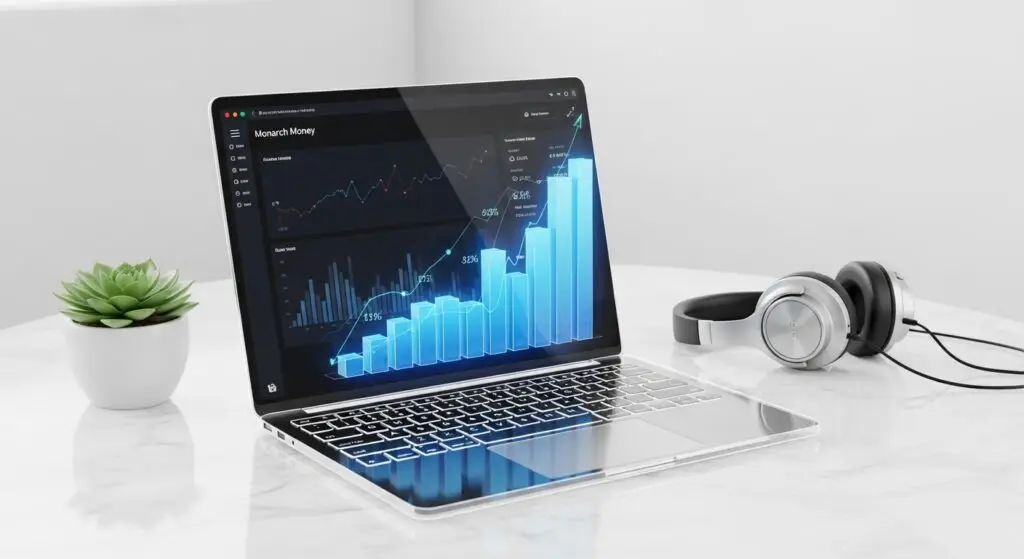
2. Monarch Money – best for US digital nomads who want automation
Monarch feels like the app you recommend to a friend who says, “I want to be more on top of money, but please don’t make me build a spreadsheet religion.”
What feels good
- The UI is clean and modern.
- It’s great for seeing the big picture quickly (cash flow, net worth, categories).
- It’s easy to keep up with when you’re moving a lot.
The honest limitation
Monarch is basically a US-first experience. If your primary accounts are in the UK or the EU, don’t pick it expecting magic. You’ll likely end up with partial coverage or extra work.
Verdict
- Best for budgeting apps for US digital nomads where your banking is still mostly US-based.
- Not my pick for best budgeting apps for digital nomads in the UK or Europe if UK/EU accounts are central to your life.
Source: Monarch Money

3. Simplifi – best Mint-style replacement (US only, and that’s okay)
Simplifi is practical. Not romantic. It’s the kind of tool that does its job if your financial life is US-based.
What it does well
- Straightforward spend tracking
- Cash flow and bills visibility
- Low mental overhead (important when you’re juggling time zones)
Where it doesn’t fit
If you’re expecting this to be your cross-border hub, it’s likely not. For UK/EU accounts, you may hit walls.
Verdict
A solid pick among the best budgeting apps for digital nomads in the US if you want a Mint-like workflow. Not a great match for Europe/UK-focused banking.
Source: Quicken Simplifi

4. TravelSpend – best travel budgeting tool when life is constant motion
TravelSpend is one of the few apps that feels like it was made by someone who has actually tried to track expenses on the road.
The moment it won me over
I was on a long travel day airport food, transit tickets, random cash withdrawals and my bank notifications were delayed. TravelSpend let me log things instantly, offline, without waiting for sync. That matters more than people think.
Why it works across US, UK, and EU
Because it’s not pretending bank sync will always save you. It’s built for travel reality: mixed currencies, inconsistent connectivity, and quick logging.
Trade-offs
- It’s not the deepest long-term budgeting system.
- If you want strict envelope budgeting or rich net worth/investment tracking, this isn’t the only tool you’ll use.
Verdict
If you’re frequently moving (or you want a dedicated travel layer), this is one of the best budgeting apps for digital nomads across the US, UK, and Europe.
Source: TravelSpend
5. PocketGuard – best “keep it simple” option (mostly US)
PocketGuard is for people who want fewer knobs and more “tell me what I can safely spend.”
What feels good
- Low setup friction
- Quick clarity on spending limits
- Helpful if you’re trying to stop leaking money on small recurring stuff
What I’d watch for
Outside the US, coverage can be limited. If your nomad setup is UK/EU-heavy, you might end up annoyed.
Verdict
Worth considering for best budgeting apps for digital nomads in the US if simplicity is the priority. Less compelling for budgeting apps for UK digital nomads or EU nomads.
Source: PocketGuard
6. Spendee – best for EU & UK nomads (especially couples/shared budgets)
If you share expenses with a partner or travel buddy, Spendee’s “shared wallet” approach can feel genuinely useful. Not gimmicky.
What feels good
- Shared wallets reduce the “who paid for what?” friction.
- It’s friendly for multi-currency life.
- It tends to make sense for EU/UK usage patterns, and it’s more natural to find apps in Europe that at least acknowledge GDPR expectations in their docs.
Nuance: bank connections vary
Spendee offers bank connections, but like most apps in the UK/EU ecosystem, “supported” is not universal. Some banks work beautifully. Some don’t. Some work… until they don’t. One disconnect caught me mid-month and I didn’t notice until my category totals felt ‘too good to be true,’ which, unsurprisingly, they were.
Verdict
A strong contender among the best budgeting apps for digital nomads in the UK and best budgeting apps for digital nomads in Europe, particularly if you want shared spending.
Source: Spendee

7. Money Lover – best global budgeting app when you want flexibility
Money Lover is the app I think of when someone says, “I’m in Europe now, might be in Asia next, and I just want something that doesn’t freak out.”
What feels good
- Works well even if you’re not perfectly synced to every bank.
- Multi-currency support is built into the vibe.
- Good for people who want a consistent tracker across countries.
What’s imperfect
Bank sync (where available) depends on region and institution. This is a recurring theme with international budgeting apps: the app may be fine; your bank connection may be the chaotic variable.
Verdict
One of the most practical budgeting apps for EU digital nomads and a strong all-rounder for global life.
Source: Money Lover
8. Rocket Money – best US subscription control (US-only energy)
Rocket Money is great at one thing: shining a flashlight into the “why am I paying for this?” corner.
Where it helps
If you’ve ever landed in a new country, checked your bank, and found a stack of subscriptions renewing while you were in transit, Rocket Money is the kind of tool that makes you go, “Oh. Right. That.”
Hard limitation
It’s US-centric. Think of it as an add-on for US banking life, not your global budgeting brain.
Verdict
Useful companion for US-based nomads; not a core pick for the UK or EU.
Source: Rocket Money
Quick picks: best budgeting apps for digital nomads by region
| Region / situation | Best app | Why |
| US | Monarch Money | Smooth automation for US accounts |
| UK | Spendee | Shared wallets + UK/EU-friendly usage |
| EU | Money Lover | Flexible multi-currency tracking |
| Constant travel | TravelSpend | Offline logging + multi-currency travel flow |
| Couples/shared expenses | Spendee | Shared wallets make life easier |
| Deep budgeting discipline | YNAB | System holds up even when sync doesn’t |
If you want the short version: pick the app that matches where your money actually lives (banks + currencies), not just where you live this month.
Security & compliance: US vs UK vs EU (what I actually pay attention to)
I’m not paranoid, but I also don’t connect my entire financial life to an app without checking a few basics.
EU/EEA (GDPR):
If you’re living in Europe, GDPR matters because it shapes what companies should disclose about data processing and your rights. I look for clear privacy policies and straightforward explanations of data handling. If it’s vague, I’m cautious.
EU (PSD2) + UK (Open Banking):
These frameworks pushed more standardized, permission-based access to banking data. When an app supports Open Banking well in the UK, it can feel cleaner than some US aggregator setups. In the EU, PSD2 exists, but the user experience still depends heavily on which banks and providers are in the chain.
US:
US apps can be secure, but the ecosystem is more fragmented. I look for MFA support, reputable connection partners, and clear security documentation.
My rule of thumb
The best budgeting apps for digital nomads make it easy to answer: How is my data accessed? What can I revoke? What happens if I stop using the app?
References:
- GDPR overview (European Commission)
- PSD2 overview (European Commission)
- UK Open Banking
Common budgeting mistakes I see nomads make (and yes, I’ve done some of these)
- Picking a US-only app, then moving to Europe and getting mad at reality.
If your core accounts become EU/UK-based, choose a tool that can live there with you. - Not tracking FX fees as a real expense.
Create a category for FX/ATM/bank fees. Otherwise you’ll wonder why you’re “overspending” when it’s actually death-by-a-thousand-spreads. - Trusting bank sync as your only system.
Sync breaks. Often at the worst time. If the app can’t handle manual/import workflows gracefully, it’s not one of the best budgeting apps for digital nomads no matter how pretty it is. - Letting subscriptions run wild during travel months.
Travel creates distraction. Distraction creates recurring charges.
Many nomads combine budgeting apps with travel-friendly credit cards to simplify expense categorization while earning points on flights and accommodation.
Disclaimer
This guide is for educational purposes only and isn’t financial, tax, or legal advice. App features, pricing, and bank connection coverage can change, and availability often depends on your specific country and institution. Always verify current compatibility and security details directly with the provider before linking accounts. If your situation involves cross-border taxes, residency rules, or complex compliance needs, consider working with a qualified professional.
Sources & references (official links)
Apps:
- YNAB: https://www.ynab.com/
- Monarch Money: https://www.monarchmoney.com/
- Simplifi: https://www.quicken.com/products/simplifi/
- TravelSpend: https://travelspend.com/
- PocketGuard: https://pocketguard.com/
- Spendee: https://www.spendee.com/
- Money Lover: https://moneylover.me/
- Rocket Money: https://www.rocketmoney.com/

Final thoughts (the honest version)
If you want my biased-but-earned takeaway: the best budgeting apps for digital nomads are the ones you’ll still use when you’re tired, offline, and spending in the “wrong” currency.
Tracking expenses is only half the equation, real progress comes from applying proven money-saving strategies for digital nomads alongside the right apps.
- If your life is mostly US banking: Monarch (or Simplifi) keeps things smooth.
- If you’re UK/EU-based or sharing expenses: Spendee is genuinely handy.
- If you want a global, flexible tracker: Money Lover is a strong bet.
- If you’re constantly moving: TravelSpend is the most travel-day-friendly tool I’ve used.
- If you want a budgeting system that works even when bank sync doesn’t: YNAB is still the gold standard just don’t expect Europe-wide bank linking to be perfect.
Every system looks perfect until you cross a border, lose a sync, or forget a subscription, all things I’ve personally done more than once.
Ever tried doing month-end cleanup after three border crossings and two currencies you didn’t even mean to use? Pick the tool that makes that less painful. That’s the one that will actually change your finances.
FAQs : Best Budgeting Apps for Digital Nomads
Q1: Which budgeting apps work in Europe?
A: From a practical “will this still be usable?” perspective: Money Lover, Spendee, and TravelSpend tend to work well for Europe-based life. YNAB also works in Europe, but you may rely more on imports/manual entry depending on your bank still a strong choice if you want a disciplined system.
Q2: What’s the best budgeting app for UK digital nomads?
A: If you want shared spending and a tool that fits UK/EU patterns, Spendee is a strong pick. If you want travel-first tracking (especially with offline entry), TravelSpend is excellent. If you want deep method-based budgeting, YNAB is great just be realistic about bank connection coverage.
Q3: Are US budgeting apps safe to use in the EU?
A: They can be, but “safe” isn’t the same as “convenient” or “GDPR-clear.” If you reside in the EU/EEA, check privacy policies, data rights, and what permissions you’re granting. If you’re unsure, limit connected accounts and consider tools that work well with manual/import workflows.
Q4: Do I need a multi-currency budgeting app?
A: If you’re paid in one currency and only travel occasionally, not necessarily. If you earn and spend across currencies regularly, multi-currency support stops being “nice to have” and starts being sanity-saving.

Tushar Sharma is the founder and editor of NomadWallets, where he writes about international banking, travel cards, cross-border payments, taxes, and financial tools for digital nomads and globally mobile professionals. He created NomadWallets to make global money decisions simpler through practical, research-backed guides built from official sources and real-world financial data.