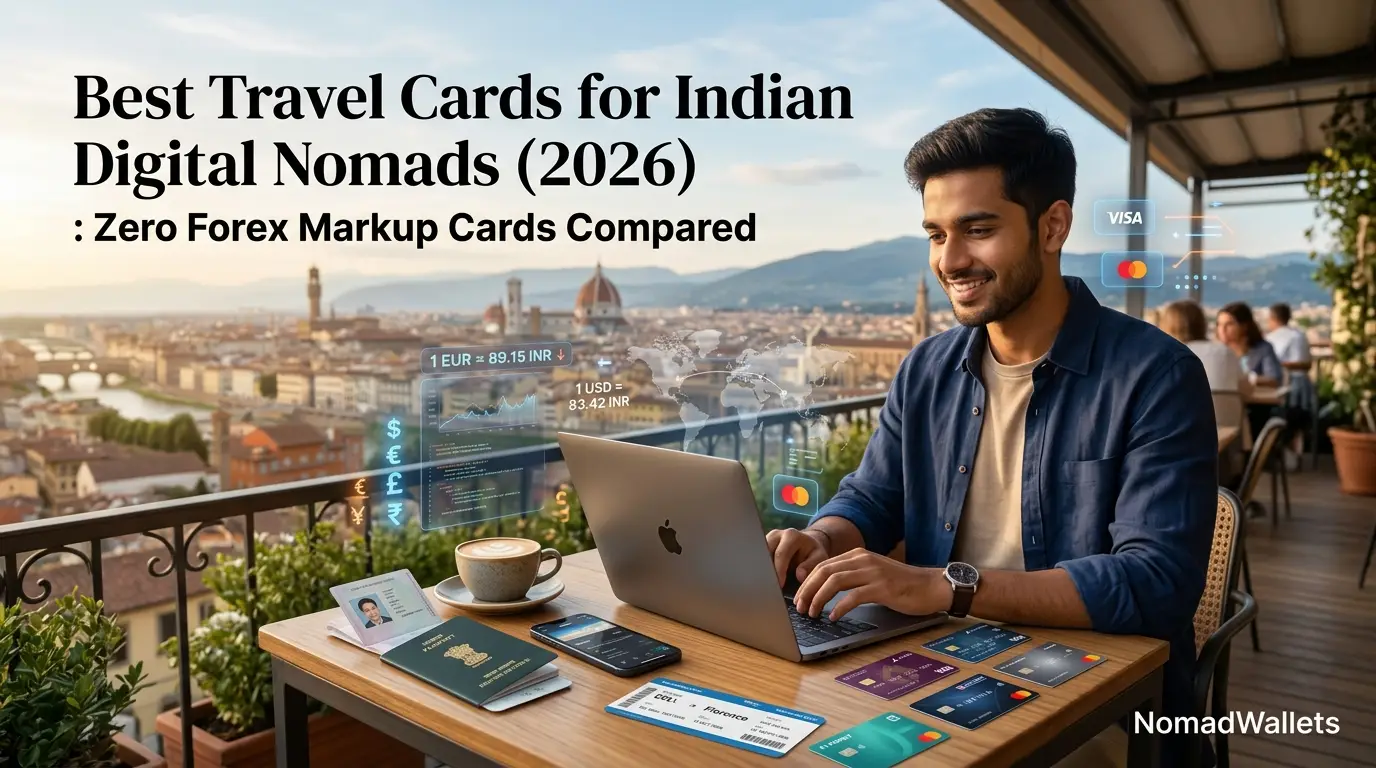
Most Indian remote workers figure out the hard way that their regular bank card is a terrible travel companion. A 3.5% forex markup here, a dynamic currency conversion trap there, an ATM withdrawal fee on top of that, and by the time you’re back home you’ve quietly handed over thousands of rupees to your bank for the privilege of spending your own money abroad.
If you’re a digital nomad or a remote worker who travels internationally, having the right travel card setup sorted before you leave can save you a meaningful amount every single month, not just on big trips, but on day-to-day expenses like coworking subscriptions, international SaaS tools, and foreign accommodation bookings.
This guide covers the best travel cards for Indians in 2026: what they are, which ones are worth it, what the RBI and LRS rules mean for you, and how to pick the right combination for the way you actually work and travel.
Quick Answer: Best Travel Cards for Indians at a Glance
If you want the short version before diving into details, here it is:
| Card | Type | Forex Markup | Currencies | Annual Fee | Best For |
| Niyo Global | Debit (linked savings) | Zero | 130+ | None | Frequent international nomads |
| Scapia Federal | Credit card | Zero | All (network rate) | None | Zero-cost backup card |
| Wise Travel Card | Prepaid multi-currency | Mid-market rate + transparent fee | 40+ | None | Multi-currency holders |
| HDFC ForexPlus | Prepaid forex card | Competitive | 20+ | Issuance fee | Rate-locking before travel |
| BookMyForex | Prepaid forex card | Competitive | 130+ | None | Live rate tracking & loading |
Always verify current fees and terms directly with the card issuer before applying, as these change.
Why Your Regular Indian Bank Card Fails Abroad
Before getting into which cards to use, it helps to understand exactly where the money leaks.
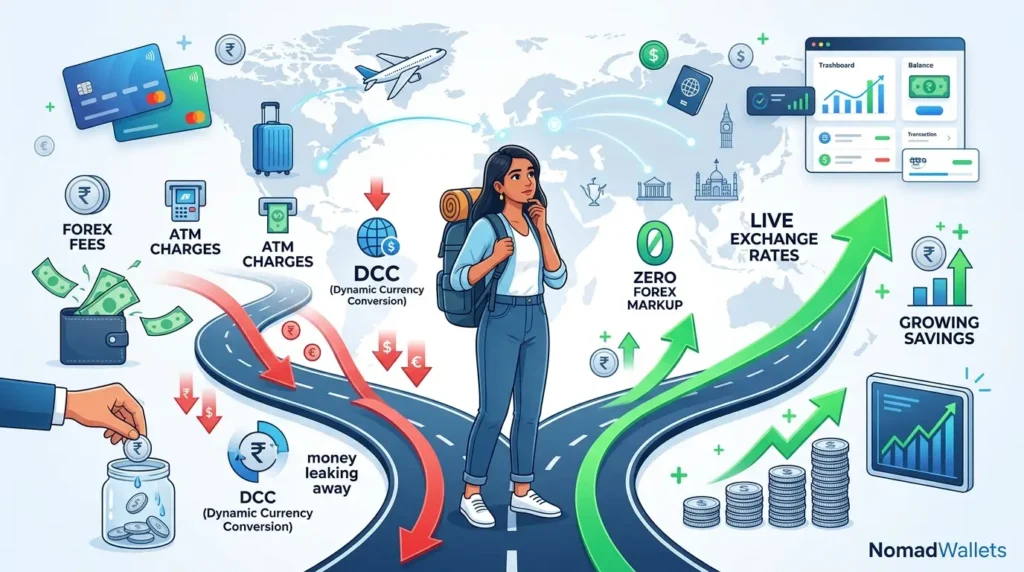
Most standard Indian debit and credit cards charge a forex markup of anywhere between 2% and 3.5% on every foreign currency transaction. That might sound small, but consider this: on ₹5 lakh of annual foreign spending, a 3–3.5% markup means quietly handing over ₹15,000–17,500 in unnecessary fees every year, even before you even factor in ATM charges or DCC losses.
On top of the markup, two other charges catch people off guard:
Dynamic Currency Conversion (DCC). When a foreign merchant or ATM asks if you want to pay in Indian rupees instead of the local currency, always say no. Choosing INR activates DCC, where the merchant’s bank does the conversion at a rate that’s typically 3 to 5% worse than your card’s network rate. It looks helpful. It is not.
ATM withdrawal fees. Many cards charge a flat fee per ATM withdrawal abroad, on top of whatever the ATM operator charges. If you’re pulling cash regularly, this adds up on its own.
Choosing from the best travel cards for Indians eliminates or drastically reduces all three of these. Some eliminate all of them entirely.
What to Look for in the Best Travel Card for Indians
Not all travel cards work the same way, and the right one depends on how you travel and spend. Here are the things that actually matter:
- Zero or near-zero forex markup. This is the main one. Look for cards that either charge 0% markup or use the live Visa or Mastercard network rate without adding their own margin on top.
- Multi-currency support. If you travel across multiple countries, a card that lets you pre-load specific currencies means you can lock in a favorable rate before you travel.
- ATM withdrawal terms. Some cards offer a few free ATM withdrawals per month abroad. Others charge per withdrawal. Know which yours is before you leave.
- Fully digital onboarding. As a remote worker, you don’t want to visit a branch to apply or reload. Cards that work entirely through an app are more practical.
- App reliability. You need to be able to check your balance, lock the card instantly if needed, and reload from wherever you are.
- Backup coverage. A single card is a single point of failure. The best setup is two cards on different networks.

Best Travel Cards for Indians in 2026
Niyo Global Card
Niyo is one of the most popular choices for Indian digital nomads, and for good reason. It can be used across 180+ countries with zero forex markup on eligible international transactions. Your balance sits in a linked savings account, so any unused funds continue earning interest according to the partner bank’s prevailing savings account rate. The app includes a global ATM locator and real-time currency conversion display.
One thing to know: Niyo works as an INR-based card, converting your balance at the live Visa network rate when you swipe, rather than letting you pre-load a specific foreign currency. This means you can’t lock in a rate before travel the way you can with a multicurrency forex card. It also requires completing KYC and opening or linking an eligible partner bank savings account.
Best for: Frequent international travellers who want maximum currency coverage and zero markup without the complexity of pre-loading multiple currencies.
Scapia Federal Bank Credit Card
Scapia has quietly become the go-to backup card for many Indian nomads. It charges zero annual fee, zero forex markup, and gives you an instant virtual card for online bookings the moment you’re approved. The rewards system offers 10% rewards on eligible Visa spending and 5% rewards on eligible UPI spending, which can be redeemed for travel benefits. The card also includes airport lounge access.
The combination of zero markup and no annual fee makes it one of the most accessible zero-markup best travel cards for Indians available to resident Indians right now. Eligibility requires you to be between 21 and 65 years old (25 to 65 if self-employed) and a resident Indian citizen.
Best for: A zero-cost backup card for online bookings and daily international spending, especially useful alongside a prepaid forex card.
Wise Travel Card
Wise supports 40 plus currencies using the mid-market exchange rate and charging transparent conversion fees instead of a traditional bank forex markup, making it one of the most transparent options for international spending. The onboarding is fully digital through a vKYC process, there are no annual fees, and you can load your account via UPI directly inside the app.
For digital nomads paying for international subscriptions, coworking spaces, and accommodation across multiple currencies, Wise is particularly strong because you can hold balances in the currencies you actually spend in rather than converting everything from INR at the point of sale.
Best for: Multi-currency holders who want the closest thing to interbank rates and a fully digital setup without branch visits.
HDFC Multicurrency Platinum ForexPlus Card
HDFC’s ForexPlus card is the right pick if you want to pre-load currencies before you travel and lock in the exchange rate. It offers competitive forex rates at point of sale, ATM withdrawals, and online purchases, with acceptance in 150 plus countries. It also comes with travel insurance covering lost luggage, delays, and medical emergencies. Note that issuance fees, reload fees, and cross-currency charges may apply depending on your specific usage.
The main tradeoff is that it requires an existing HDFC Bank relationship and more traditional onboarding compared to fintech-first options like Wise or Niyo.
Best for: Existing HDFC customers who want rate-locking before a big trip and the reassurance of a major Indian bank behind the card.
BookMyForex Card (YES Bank)
BookMyForex offers interbank-linked exchange rates with zero issuance, reload, unload, and annual fees. The app lets you track live exchange rates, reload your card instantly, and lock in a favourable rate before you travel. It supports 130 plus currencies and is particularly well suited to people who actively track exchange rates and want to lock in a favorable moment before loading. The app lets you watch rates and load at the point you choose.
Best for: Rate-conscious travellers who want to time their currency load and prefer transparent, live pricing over fixed markup models.
NomadWallets Recommended Setup (2026)
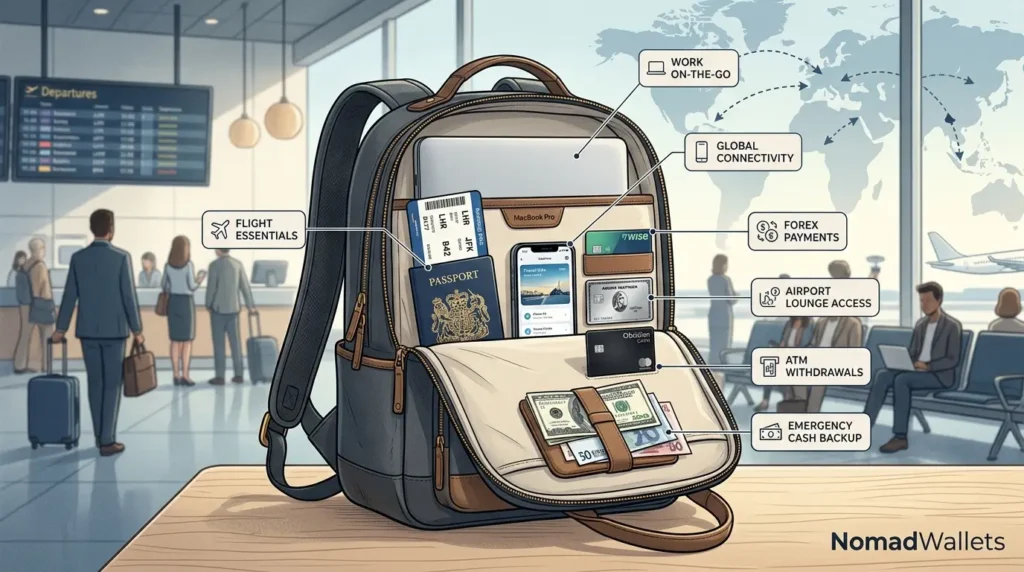
The best travel cards for Indians aren’t about finding one perfect card. It’s about the right combination for your travel style. Here’s what we recommend:
| Nomad Type | Primary Card | Backup Card |
| Budget Nomad (1–2 trips/year) | Scapia Federal (zero markup credit) | Wise Travel Card (multi-currency) |
| Long-term Traveller (6+ months/year) | Niyo Global (zero markup debit) | Zero forex credit card + emergency backup |
| High Spender (₹5L+ internationally/year) | HDFC Infinia (if eligible) (premium travel credit) | Scapia + BookMyForex for ATM cash |
For most Indian digital nomads just getting started, the Scapia + Wise combination covers nearly every situation without paying premium annual fees. Set this up once and you’ll wonder why you waited.
Forex Card vs Credit Card vs Debit Card: What’s Actually Best for Nomads?
This comes up a lot, and the honest answer is that the best setup is a combination rather than choosing one.
Zero-markup credit cards generally beat forex cards for most day-to-day spending because you get the Visa or Mastercard network rate, purchase protection, reward points, and no need to pre-load money. A prepaid forex card is still useful as a backup and specifically for ATM cash withdrawals, where credit cards often attract cash advance fees.
For a digital nomad, the best travel cards for Indians to combine are a zero-markup credit card (Scapia or a premium option like HDFC Infinia if you travel frequently) for daily international spending, and a prepaid forex card (Niyo, Wise, or BookMyForex) for ATM withdrawals and as a backup if your credit card gets blocked or lost.
For frequent international travellers spending over ₹5 lakh a year internationally, the HDFC Infinia plus Scapia combination is a common recommendation: Infinia for lounge access and booking rewards, Scapia for zero-markup daily spending. For occasional travellers doing one or two trips a year, just getting the Scapia and a Wise or Niyo card covers most situations without paying premium card annual fees.
Country Compatibility: Which Card Works Best Where?
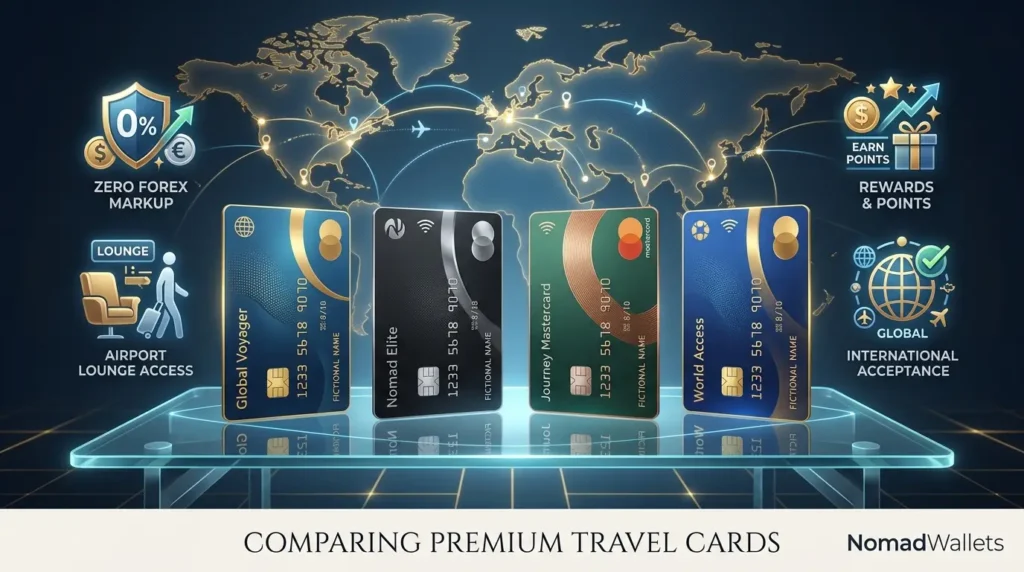
One of the most practical questions for Indian digital nomads is which of the best travel cards for Indians performs best in specific destinations. Here’s a quick reference:
| Destination | Recommended Card(s) | Notes |
| Thailand | Niyo or Wise + backup credit card | ATMs widely available; watch for ATM operator fees |
| Europe | Zero forex credit card (Scapia/Infinia) | Card acceptance high; DCC risk at tourist spots |
| Indonesia (Bali) | Visa + Mastercard backup | Cash-heavy; carry both networks |
| Vietnam | ATM-friendly card + cash backup | Cash still preferred in many areas |
| Japan | Card + cash backup | Many smaller merchants still cash-only |
| UAE / Singapore | Any zero-markup card works well | High card acceptance; low cash need |
Always carry two cards on different networks when travelling. A Visa and a Mastercard combination means if one network has issues in a specific country, you have a fallback.
RBI LRS Rules and TCS: What Indian Digital Nomads Need to Know
This section matters more than most people realise, especially if you’re spending significant amounts abroad each year.
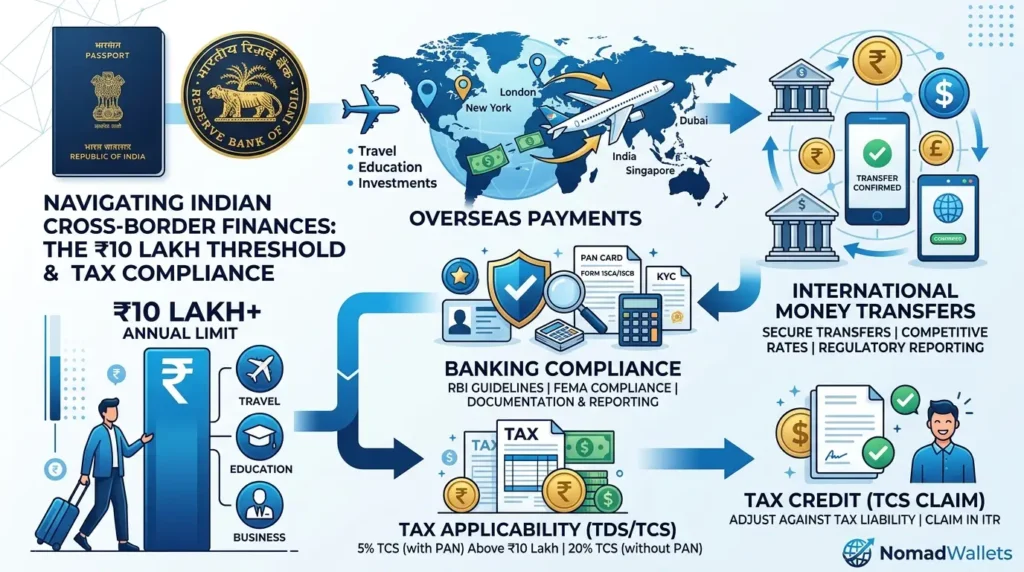
The Liberalised Remittance Scheme (LRS) allows resident Indians to remit up to USD 250,000 per financial year for permitted purposes including travel, education, medical treatment, and international investments. Loading a forex card with foreign currency counts as an outward remittance under LRS.
Tax Collected at Source (TCS) applies once your total forex remittances in a financial year cross ₹10 lakh. As of June 2026, effective from April 1, 2026, the TCS rate is 2% on amounts exceeding ₹10 lakh for travel and medical remittances, down from 5% previously. The important thing to remember is that TCS is not an extra tax you lose permanently. It’s advance tax that you can claim as a tax credit when filing your income tax return.
For most Indian digital nomads, practical implications are:
- Keep your total annual forex card loads and foreign currency purchases across all banks below ₹10 lakh and you pay zero TCS
- If you go over, you pay 2% TCS on the excess, which you reclaim at ITR filing
- International credit card spending while you are physically abroad does not count toward LRS under current CBDT guidance, though this has changed in the past so it’s worth confirming with your card issuer
One more thing worth knowing: the ₹10 lakh threshold is tracked at PAN level across all banks, not per bank account. If you load ₹6 lakh on a Niyo card and ₹5 lakh on an HDFC ForexPlus card in the same financial year, you’ve crossed the threshold even though neither individual load did.
How to Apply for a Travel Card
The process varies a bit by card type:
For prepaid forex cards (HDFC ForexPlus, BookMyForex): You’ll need a valid passport, airline ticket or visa as proof of travel plans, and a PAN card. Some cards like HDFC require an existing bank relationship. Thomas Cook and BookMyForex can be applied for online and processed quickly for upcoming travel.
For fintech debit cards (Niyo, Wise): Fully digital. You complete a vKYC process through the app, link or open a savings account, and the card is mailed to your address. No branch visit required.
For zero-markup credit cards (Scapia, IDFC First WOW): Standard credit card application process: KYC documents, income proof, and a credit check. Self-employed applicants should check eligibility age requirements (25 to 65 for Scapia if self-employed).
Tips for Using Travel Cards as an Indian Digital Nomad
A few things worth keeping in mind once you’re out there:
- Always carry two cards on different networks. A Visa and a Mastercard combination means if one network has issues in a specific country, you have a fallback. Our guide to the best mobile banks for travellers has more on building a reliable financial backup system while on the move.
- Never accept DCC. Always pay in the local currency, not INR, when given the choice at a foreign terminal or ATM. This is the single easiest way to avoid unnecessary fees.
- Track your annual LRS remittances. If you’re loading forex cards regularly across the year, keep a simple running total so you know where you stand relative to the ₹10 lakh TCS threshold.
- Reload before a big trip, not during. If you’re using a rate-locking card like HDFC ForexPlus or BookMyForex, loading when the INR is relatively strong saves more than most people realise over the course of a year.
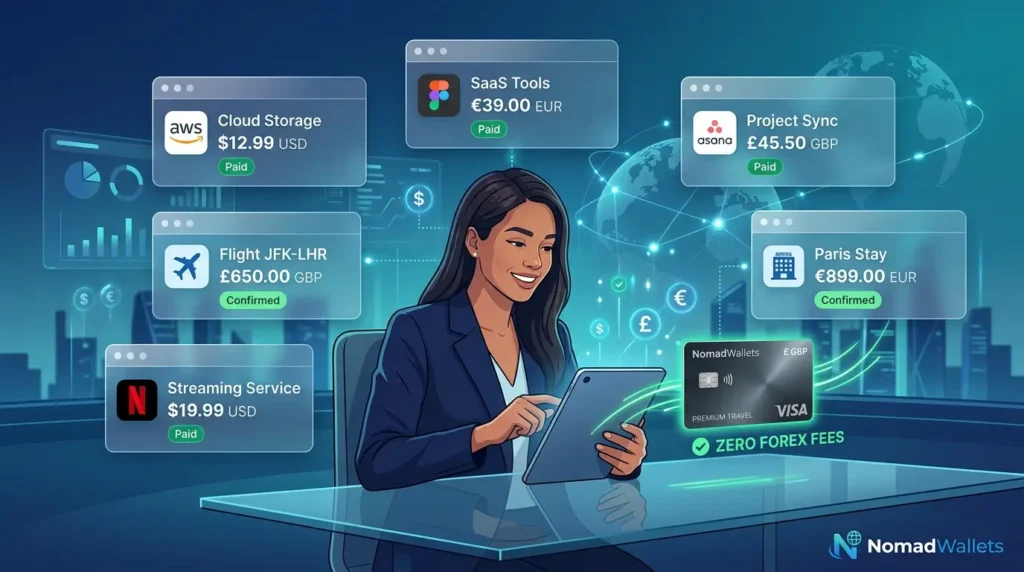
- Use your card for online subscriptions too. International SaaS tools, cloud storage, project management software billed in USD are all forex transactions on a regular card. Switching them to a zero-markup card is a passive saving that costs you nothing.
If you’re trying to keep living costs low while working remotely, pairing the best travel cards for Indians with a budget-conscious approach makes a real difference. Our digital nomad budget tracking guide is a good starting point for building that system.
Digital Nomad Finance Tips for Indians
Travel cards solve only one part of managing money abroad. For Indian digital nomads, the bigger picture includes reducing currency conversion costs, managing international payments, tracking expenses, and having backup options when travelling between countries.
A strong setup usually combines:
- A zero forex card for daily spending
- A backup card on another network
- A reliable way to receive and send international payments
- A budgeting system for long-term travel
- Awareness of RBI LRS and tax rules
Common Mistakes Indians Make With Travel Cards
- Using a regular debit card abroad. This is still the most common one. The 3.5% markup on every transaction is a quiet, consistent drain on your travel budget. Choosing from the best travel cards for Indians costs nothing extra and fixes this entirely.
- Relying on a single card. One blocked card, one magnetic strip failure, one lost wallet, and you’re in trouble if you haven’t got a backup.
- Not tracking LRS totals across banks. The ₹10 lakh TCS threshold is calculated across all your forex transactions in a financial year, regardless of how many banks or cards you use.
- Forgetting that international spending patterns qualify for better card tiers. If you’re spending ₹5 lakh or more internationally per year, a premium card like HDFC Infinia pays for its annual fee through lounge access, reward points, and zero markup savings.
For a broader view of managing money smartly as a remote worker, our guide to the best money transfer services for digital nomads covers the international payment side of things that complements your travel card setup.

Conclusion
The best travel cards for Indians in 2026 are not hard to find. The real issue is that most people stick with their regular bank card out of habit and quietly pay the price for it. A zero-markup credit card for daily spending, a prepaid forex or fintech card as backup and for ATM withdrawals, and a basic understanding of RBI LRS and TCS rules covers almost everything you’ll need as a digital nomad.
For many Indian digital nomads, Niyo and Scapia are among the easiest cards to get started with. If you’re spending heavily abroad or locking in rates matters to you, HDFC ForexPlus or BookMyForex are worth looking at seriously. And if you want maximum transparency with the closest thing to interbank rates on the broadest range of currencies, Wise is hard to beat.
When it comes to the best travel cards for Indians, the combination approach always wins over any single card. Set this up once and you’ll wonder why you waited.
Frequently Asked Questions (FAQs)
Q1. What is the best travel card for Indians in 2026?
A. For most Indian digital nomads, the best travel cards for Indians are a combination of the Scapia Federal Bank Credit Card (zero markup, zero annual fee, for daily spending) and the Niyo Global or Wise Travel Card (for ATM withdrawals and backup). This two-card setup covers most situations without paying premium annual fees.
Q2. Is Niyo or Scapia better for digital nomads?
A. They serve different purposes and work well together. Niyo is a debit card linked to a savings account, better for ATM withdrawals and multi-currency travel. Scapia is a credit card, better for online bookings and daily international purchases with rewards on top. Using both covers most situations.
Q3. Do I have to pay tax on forex card spending?
A. TCS applies on total forex remittances (including card loads) above ₹10 lakh per financial year per individual at PAN level. The rate is 2% on the amount exceeding the threshold as of April 2026. TCS is not a permanent cost. You can claim it back when filing your income tax return.
Q4. Can I use my travel card for international software subscriptions?
A. Yes, and you should. International SaaS subscriptions billed in USD, GBP, or EUR are forex transactions. Switching these to one of the best travel cards for Indians instead of your regular bank card is a passive saving that adds up over the course of a year.
Q5. What is the RBI LRS limit for Indian travellers?
A. The LRS limit is USD 250,000 per individual per financial year (April to March) for permitted purposes. Forex card loads count toward this limit. International credit card spending while you are physically abroad currently does not count toward LRS under existing CBDT guidance, but it is worth confirming with your card issuer since this has changed before.
Q6. What happens if I lose my card abroad?
A. Most digital-first cards (Niyo, Scapia, Wise) let you instantly freeze your card from the app. Always carry a second card on a different network as backup, and keep your card issuer’s international helpline number saved offline, not just in your phone.
Disclaimer: Card fees, forex markup rates, TCS thresholds, and RBI/LRS rules are subject to change. Information in this article is based on publicly available sources as of June 2026. Always verify current terms directly with the card issuer before applying. This article is for informational purposes only and does not constitute financial advice. For TCS and LRS compliance, refer to official RBI and Income Tax India sources or consult a qualified tax professional.

Tushar Sharma is the founder and editor of NomadWallets, where he writes about international banking, travel cards, cross-border payments, taxes, and financial tools for digital nomads and globally mobile professionals. He created NomadWallets to make global money decisions simpler through practical, research-backed guides built from official sources and real-world financial data.