

Picture this: you’re at a café you discovered three weeks ago. Your client is in Chicago. Your coffee costs less than a dollar. And the local news is, blissfully, about nothing that concerns you. No political drama. No travel advisories. Just good Wi-Fi, reliable sunshine, and the steady rhythm of work.
That quiet kind of freedom is what’s pulling thousands of remote workers toward a smarter relocation strategy, one built not just on cheap rent and fast internet, but on geopolitical calm. In 2026, the best remote work destinations aren’t always the trendiest. They’re the most stable.
This guide introduces the Neutrality Index, a practical framework we created for evaluating stable remote work countries based on political stability, visa access, internet quality, cost of living, and foreign-policy neutrality. Below, we rank the five best Safe Haven Nomad Hubs for 2026: places where you can actually build a life, not just pass through.
Who this guide is for: Remote employees, freelancers, online business owners, and long-term travelers who want to live abroad in politically stable countries for remote workers, places with clear visa pathways and low exposure to global conflict.
In This Guide
- Why stability matters more than ever in 2026
- What is the Neutrality Index?
- How we selected the top 5 hubs
- The top 5 safest countries for digital nomads in 2026
- Side-by-side comparison
- Tips for choosing your safe haven
- Frequently asked questions
Why Stability Matters More Than Ever in 2026
Remote work has permanently changed what “home” means. But freedom of location only holds its value when the place you’ve chosen stays predictable. Choosing the wrong base (one with an unstable government, sudden visa rule changes, or proximity to active conflict) can cost you far more than a cheap rent discount is worth.
According to MBO Partners’ 2023 State of Independence report, there were over 17 million digital nomads in the United States alone, a number that had tripled since 2019. Meanwhile, the World Bank’s Governance Indicators show that political stability scores have declined in more than 60 countries over the past five years. The trend is clear: more remote workers, in a less stable world.
Experienced nomads have increasingly shifted toward stable expat destinations: countries where democratic systems are strong, foreign policy is neutral, and visa programs are designed with long-term residents in mind. Places like Thailand, Costa Rica, and Uruguay have seen steady growth in remote worker populations precisely because they offer something more valuable than novelty: predictability.
Worth knowing: Geopolitical risk doesn’t just affect safety. It affects visa policy, banking access, currency stability, and even travel insurance coverage. Understanding how travel insurance handles war and geopolitical risk is an important part of planning any long-term stay abroad.
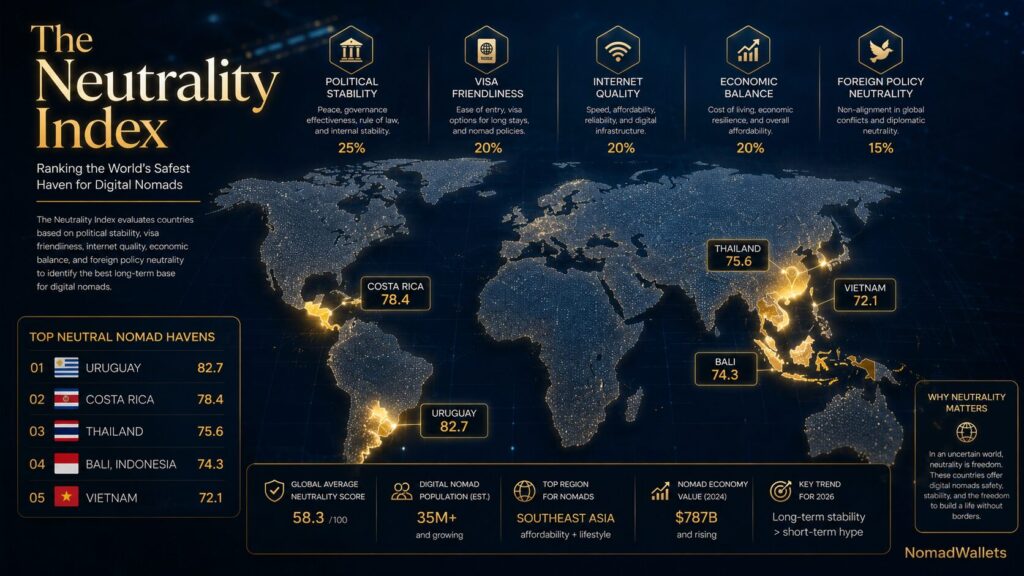
What Is the Neutrality Index?
For this article, we created a practical framework called the Neutrality Index, built around one core question: If global tensions escalate, how likely is this country to stay out of it and keep your life uninterrupted?
Countries that maintain balanced foreign relations and avoid hard alignment with any single geopolitical bloc tend to be far more stable environments for foreign residents. They’re less likely to become targets of sanctions, less likely to see sudden visa policy swings driven by international pressure, and more likely to maintain consistent relationships with the outside world.
Countries that score well on the Neutrality Index make the strongest safe haven nomad hubs for long-term residents.
| Factor | Why It Matters for Nomads |
| Political stability | Reduces risk of sudden law changes, civil unrest, or government collapse |
| Foreign policy neutrality | Keeps you away from conflict zones and sanctions exposure |
| Economic balance | Ensures predictable cost of living and stable local banking |
| Visa friendliness | Enables legal, long-term stays without constant bureaucratic anxiety |
| Internet quality | Supports uninterrupted remote work across all time zones |
The Global Peace Index, published annually by the Institute for Economics and Peace, provides solid baseline data for the first two pillars: conflict risk and political stability. We cross-reference this with visa policy records, Speedtest’s Global Index for internet infrastructure, and Numbeo’s Cost of Living Index for financial accessibility.
How We Selected the Top 5 Hubs
Every country in this list was evaluated against five criteria. To qualify as one of the safest remote work countries for 2026, a destination had to demonstrate strength across all five, not just excel in one or two.
- Neutral political stance – no active military conflicts, historically balanced foreign relations
- Low involvement in global disputes, not a sanctions target, not exclusively aligned with any single geopolitical bloc
- Clear visa pathways – dedicated digital nomad visa options for 2026 or clear long-term residency routes
- Affordable cost of living – accessible on typical freelance or remote employee income
- Reliable internet infrastructure – capable of supporting full-time remote work without significant downtime
The data picture across our top five safe haven nomad hubs is consistent.
The Top 5 Safe Haven Nomad Hubs for 2026
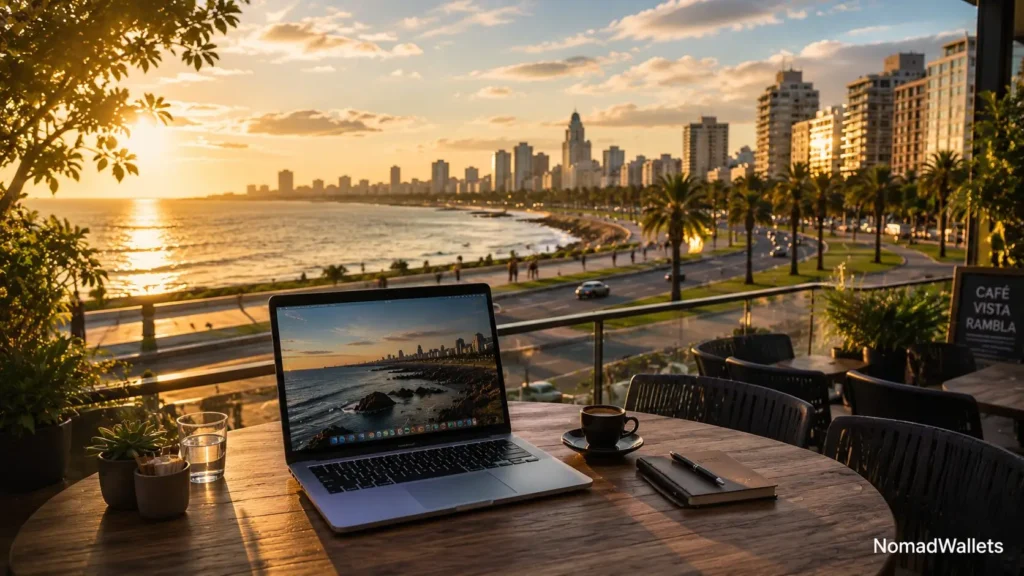
🇺🇾 1. Uruguay – Neutrality Score: 9.0 / 10
Uruguay rarely makes headlines. For a remote worker, that’s the point. Ranked as the most democratic country in Latin America by the Economist Intelligence Unit’s Democracy Index, Uruguay offers a level of political stability that most countries in the region can’t match, clean elections, low corruption, and a foreign policy tradition rooted in diplomacy rather than alliance.
Its capital, Montevideo, consistently ranks among the top cities in Latin America for quality of life in Mercer’s Quality of Living Survey. The country offers a temporary residence visa that converts to permanent residency after three years, offering a clear, legally secure pathway for anyone planning to stay long-term.
Uruguay isn’t the cheapest destination on this list, but what you pay for is reliability. Its healthcare system is strong, its banking sector is stable, and its government doesn’t tend to make sudden decisions that disrupt the lives of foreign residents.
| Cost / Month | $1,800–$2,500 |
| Safety Level | High |
| Internet Speed | 100+ Mbps (cities) |
| Visa Route | Temporary → Permanent |
Why it earns the top spot: No other Latin American country combines democratic maturity, legal transparency, and foreign-policy neutrality at this level. It’s the right choice for remote workers who want a long-term, stable base with a clear path to residency.
Best for: Families, legal-clarity seekers, professionals planning a 2–5+ year stay
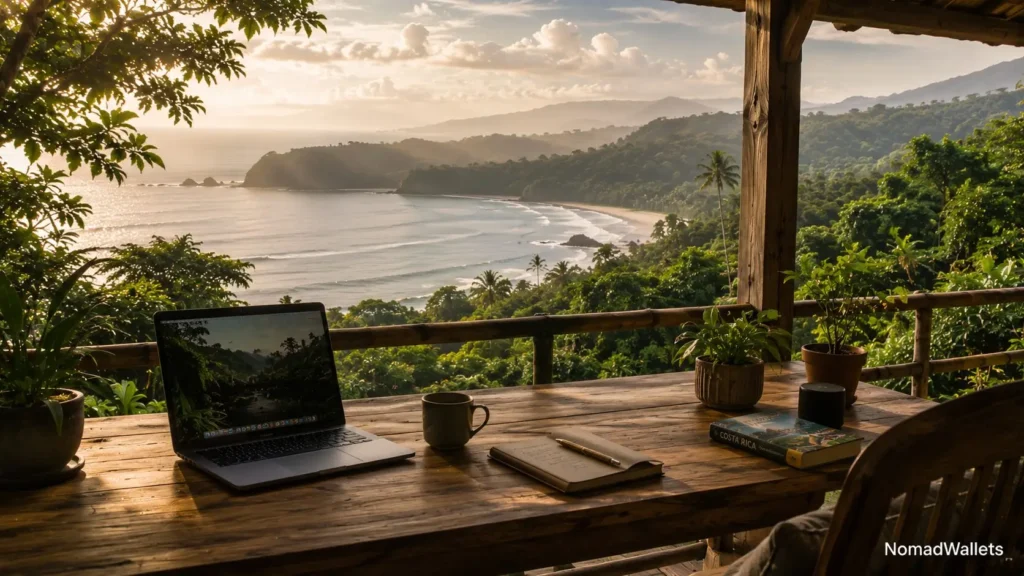
🇨🇷 2. Costa Rica – Neutrality Score: 8.8 / 10
Costa Rica abolished its military in 1948. That decision, enshrined in Article 12 of the national constitution, is one of the clearest geopolitical signals any country can send. Instead of a defense budget, Costa Rica invests in education and healthcare. The result, more than 75 years later, is a country with strong democratic institutions, a stable middle class, and no meaningful military entanglements.
In 2022, Costa Rica launched a dedicated digital nomad visa requiring a minimum monthly income of $3,000 (verify the current figure at Costa Rica’s official immigration portal before applying, as thresholds can be adjusted). The visa grants a one-year stay, renewable for a second year. Cities like San José and the coastal hub of Tamarindo have well-developed co-working communities and expat infrastructure.
Costa Rica scores exceptionally well as one of the politically stable countries for expats not because it avoids all problems (petty crime exists in urban areas), but because its political and foreign-policy risks are among the lowest in the Americas.
| Cost / Month | $1,700–$2,400 |
| Safety Level | High |
| Internet Speed | Good (urban areas) |
| Visa Route | Digital Nomad Visa |
Why it earns second place: A constitutional commitment to peace, an active nomad visa program, and a mature expat community make Costa Rica one of the most complete packages in Latin America for remote workers.
Best for: Nature lovers, sustainability-focused freelancers, those wanting a proven Latin American base
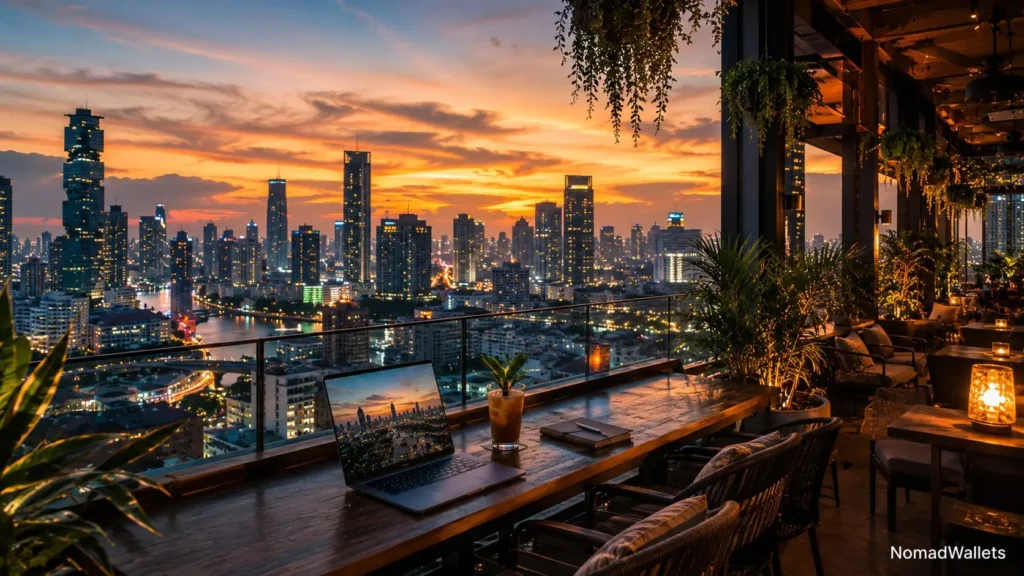
🇹🇭 3. Thailand – Neutrality Score: 8.5 / 10
Thailand has been a staple of digital nomad life for over a decade, and in 2026 it remains one of the strongest long-term nomad bases available. Its infrastructure has matured significantly. According to Speedtest’s Global Index, Thailand’s average broadband speed ranks in the top 30 worldwide, a genuine competitive advantage for remote workers dealing with video calls, large file transfers, or cloud-based workflows.
In 2022, Thailand introduced its Long-Term Resident (LTR) visa, targeting remote workers, retirees, and high-skilled professionals with a 10-year renewable stay and significant tax incentives. This replaced the old cycle of 30-day tourist visas and border runs that defined nomad life in Thailand for years.
Geopolitically, Thailand maintains careful neutrality. It is not a NATO member, keeps active trade relationships with both Western and Eastern economic blocs, and has historically avoided taking hard positions in international disputes. This track record keeps Thailand largely insulated from the kind of sanctions, travel disruptions, or visa retaliation that affects more politically exposed countries.
| Cost / Month | $1,000–$1,800 |
| Safety Level | Medium–High |
| Internet Speed | Top 30 globally |
| Visa Route | LTR Visa (10 yr) |
Why it earns third place: The combination of world-class internet, affordable living, an established nomad community across Bangkok, Chiang Mai, and Phuket, and a genuinely strong long-term visa makes Thailand hard to beat for most remote workers.
Best for: First-time nomads, budget-conscious professionals, those wanting Asia’s best infrastructure
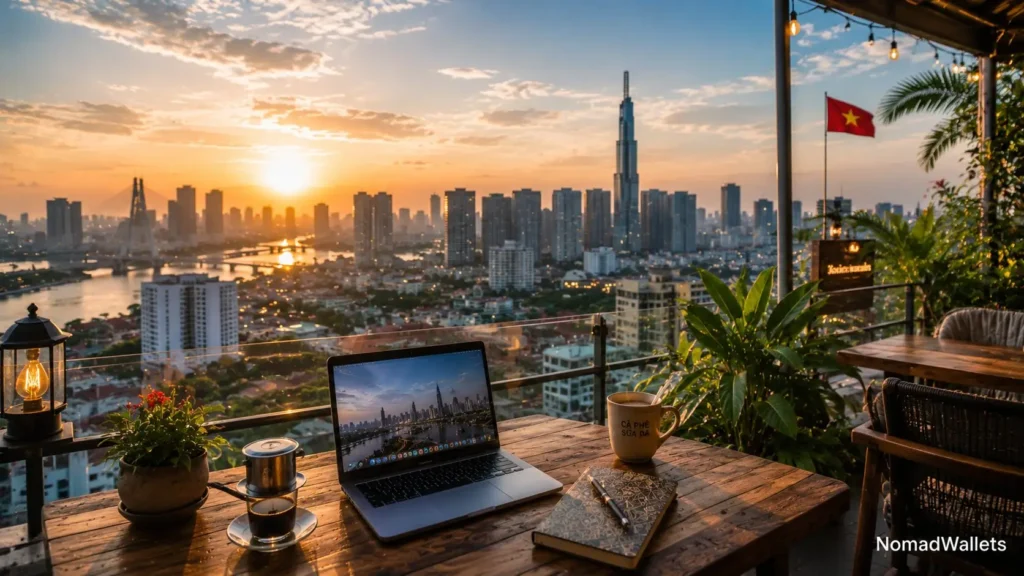
🇻🇳 4. Vietnam – Neutrality Score: 8.2 / 10
Vietnam is one of the most compelling value propositions in Southeast Asia for long-term remote workers. GDP growth has averaged over 6% annually for the past decade, according to World Bank data, reflecting an economy that is not just stable, but expanding, which translates to improving infrastructure, more international services, and a growing co-working ecosystem in cities like Ho Chi Minh City and Hanoi.
On cost, Vietnam consistently ranks as one of the most affordable quality destinations for remote workers. Numbeo’s Cost of Living Index places a comfortable lifestyle in Vietnam at roughly $800–$1,400 per month, lower than any other country on this list.
Geopolitically, Vietnam has spent decades walking a careful diplomatic line between the United States and China, its two largest trading partners. This deliberate balancing act, sometimes called “bamboo diplomacy”, is a meaningful stability signal for foreign residents. Vietnam has historically maintained a balanced diplomatic strategy between major powers, which insulates it from becoming a direct flashpoint even as broader regional tensions shift.
Visa note: Vietnam’s e-visa and longer-stay options have been improving, but the pathway is less straightforward than Thailand’s LTR visa or Uruguay’s residency program. Always check the official Vietnamese e-visa portal before making plans.
| Cost / Month | $800–$1,400 |
| Safety Level | Medium–High |
| Internet Speed | Good & improving |
| Visa Route | E-visa / 90-day |
Best for: Budget-focused nomads, those seeking deep cultural immersion, long-term travelers who prioritize value

🇮🇩 5. Indonesia (Bali) – Neutrality Score: 8.0 / 10
Bali is where digital nomadism went mainstream, and its infrastructure has evolved to match. In 2022, Indonesia introduced its Second Home Visa, a long-stay option that allows eligible foreign nationals to remain in the country for up to five years. Important clarification: this is not a budget nomad visa. It requires proof of significant financial assets (currently approximately $130,000 USD or equivalent in a verified account) and is designed for established remote professionals and business owners, not entry-level freelancers. Always verify the current requirements at Indonesia’s official immigration authority.
For those who qualify, or who enter on a standard tourist visa while exploring options, Bali’s co-working scene is genuinely world-class. Established hubs like Dojo Bali and Outpost have served tens of thousands of nomads and provide real community infrastructure (mentorship networks, events, and professional connections), not just desks and passwords.
Indonesia’s foreign policy neutrality runs deep. As a founding member of the Non-Aligned Movement since the Bandung Conference of 1955, Indonesia has a decades-long tradition of staying outside major geopolitical blocs. That tradition continues today, making it one of the more politically insulated environments in Southeast Asia for foreign residents.
*Second Home Visa requires significant financial proof. Verify current requirements before applying.
| Cost / Month | $1,000–$2,000 |
| Safety Level | Medium |
| Internet Speed | Good (Bali hubs) |
| Visa Route | Second Home Visa* |
Best for: Creative professionals, community-driven workers, established remote business owners
Side-by-Side Comparison
| Country | Safety | Monthly Cost | Internet | Visa Ease | Score |
| Uruguay | High | $1,800–$2,500 | Good | Easy | 9.0 |
| Costa Rica | High | $1,700–$2,400 | Good | Easy | 8.8 |
| Thailand | Medium–High | $1,000–$1,800 | Excellent | Easy | 8.5 |
| Vietnam | Medium–High | $800–$1,400 | Good | Moderate | 8.2 |
| Indonesia (Bali) | Medium | $1,000–$2,000 | Good | Moderate* | 8.0 |

Best Digital Nomad Visas 2026: What to Know Before You Go
Visa access is one of the most underestimated factors when choosing among the safest places to live abroad in 2026. Here’s a quick overview of the best digital nomad visa options currently available across these five destinations:
- Costa Rica offers a dedicated 1-year digital nomad visa (renewable) with a straightforward application process, among the clearest pathways in Latin America for low-risk countries for remote workers.
- Thailand’s LTR visa is the gold standard in Southeast Asia: a 10-year renewable stay with tax incentives, designed specifically for high-skill remote professionals.
- Uruguay offers a residency-to-permanence track that appeals to remote workers seeking long-term legal certainty rather than a rolling visa cycle.
- Vietnam and Indonesia have more complex pathways, but both continue improving their options for foreign remote workers and are worth watching closely through 2026.
Always check official government immigration portals directly before making any plans. Visa rules can change quickly and blog posts (including this one) may not reflect the most current requirements.
Safest Places to Live Abroad in 2026: What the Data Says
For nomads researching the best long-term nomad countries, it helps to look beyond anecdote. The data picture across our top five destinations is consistent:
- All five rank in the top tier of the Global Peace Index for their respective regions.
- All five have maintained stable or improving democratic governance scores per the World Bank Governance Indicators over the past five years.
- All five offer improving internet infrastructure relative to regional averages, per Speedtest’s Global Index.
The common thread isn’t just affordability or lifestyle appeal. It’s structural resilience. These are countries that have built institutions designed to last.
Practical Tips for Choosing Your Safe Haven
The right choice depends on your income, your timeline, and your priorities. Here’s what experienced long-term nomads consistently recommend:
Always start with official visa sources
Visa rules change. The difference between a remote work visa and a tourist visa can have significant legal and tax implications. Before booking anything, check the official government immigration portal for the country you’re considering, not a third-party blog, not an influencer’s YouTube video.
Keep 3-6 months of backup savings
Financial advisors consistently recommend maintaining three to six months of accessible living expenses as a general rule, and that matters even more abroad, where an emergency, a policy change, or a personal situation can require rapid relocation. Knowing how to transfer money internationally without losing significant sums to fees is a real skill worth developing before you need it urgently.
Prioritize access to quality healthcare
For stays longer than three months, healthcare access stops being optional. Bangkok, Montevideo, San José, and Ho Chi Minh City all have hospitals with internationally trained staff and facilities equipped for foreign patients. Bali’s medical infrastructure is more limited, and serious cases often require evacuation to Singapore or Jakarta.
Understand local tax obligations
Living under a nomad visa doesn’t automatically exempt you from tax obligations, whether in your home country or your host country. Tax rules differ significantly between tourist status and legal residency. Consult a tax professional familiar with expat situations before you commit to a long-term stay anywhere.
Frequently Asked Questions
Q1. What exactly is a safe haven nomad hub?
A. A country with low geopolitical risk, a stable democratic government, reasonable visa access for foreign remote workers, and reliable infrastructure for full-time remote work. The emphasis is on long-term stability, not just low cost or good weather.
Q2. Which country is the safest for digital nomads in 2026?
A. Uruguay and Costa Rica lead on democratic stability and legal predictability. In Southeast Asia, Thailand offers the strongest combination of infrastructure, affordability, and visa clarity through its Long-Term Resident visa. The best choice depends on your budget, preferred region, and how important legal residency pathways are to you.
Q3. Are Southeast Asian countries genuinely safe for long-term remote work?
A. Yes, for the most part. Thailand, Vietnam, and Indonesia have each made deliberate moves to attract remote workers with improved visa options and infrastructure investment. The main risk in Southeast Asia isn’t personal safety. It’s visa complexity and the lack of straightforward long-term residency pathways compared to Latin America.
Q4. What’s the cheapest option among these stable expat destinations?
A. Vietnam, where a comfortable lifestyle is accessible at roughly $800–$1,400 per month. However, Vietnam’s visa pathway is less clear-cut than some other destinations, so budget-focused nomads should research current options carefully before committing.
Q5. Is Bali’s Digital Nomad Visa easy to get?
A. Indonesia’s Second Home Visa, the long-stay option most relevant to nomads, requires proof of significant financial assets (around $130,000 USD equivalent). It’s not a standard budget nomad visa. For shorter stays, most visitors use a tourist visa and explore options in-country. Always verify current requirements with Indonesia’s official immigration authority.
Q6. How do I use the Neutrality Index for my own research?
A. Score your shortlisted countries across five factors: political stability, foreign policy neutrality, visa accessibility, cost of living, and internet quality. Weight the factors according to your priorities. If legal certainty is critical, weight visa accessibility higher. Cross-reference with the Global Peace Index and official government sources, not travel blogs.
Q7. Are these destinations safe to travel to in 2026?
A. Yes. All five countries on this list have low geopolitical risk profiles and no active international conflicts. That said, personal safety, petty crime, and local conditions vary by city and neighborhood, so research your specific destination carefully, and always maintain travel insurance that covers medical evacuation.
Conclusion:
The world isn’t getting simpler, and the freedom that remote work offers is only as durable as the foundation you build it on. The five countries in this guide: Uruguay, Costa Rica, Thailand, Vietnam, and Indonesia (Bali) — aren’t just affordable or well-connected. They’re resilient. Their governments are stable, their foreign policies are neutral, and their systems have been tested by time.
Choosing the right safe haven nomad hub in 2026 isn’t about chasing the next trending destination. It’s about finding a place where you can focus on your work, your life, and your long-term plans without constant uncertainty in the background.
Plan carefully. Check the official sources. And find your quiet café with the reliable Wi-Fi.
Disclaimer: This article is for general informational purposes only and reflects information available as of May 2026. Visa rules, financial requirements, and political conditions can change. Always verify current requirements with official government immigration authorities before making any relocation decision. This article does not constitute legal, financial, or immigration advice.
Citations & Sources: MBO Partners State of Independence Report (2023); World Bank Governance Indicators; Institute for Economics and Peace Global Peace Index; Speedtest Global Index; Numbeo Cost of Living Index; Mercer Quality of Living Survey; Economist Intelligence Unit Democracy Index. Visa details sourced from official government portals, see inline links.

Tushar Sharma is the founder and editor of NomadWallets, where he writes about international banking, travel cards, cross-border payments, taxes, and financial tools for digital nomads and globally mobile professionals. He created NomadWallets to make global money decisions simpler through practical, research-backed guides built from official sources and real-world financial data.